Camping Gear Mould Guide: Clean, Prevent & Store
A wet tent, rolled swag or damp sleeping bag can develop mould surprisingly quickly in storage. This guide is the broad camp-gear hub: how to prevent mould, clean different materials gently and store equipment so it is ready for the next trip.
Prevention starts at pack-down
If gear is dry, brush away dirt and leaf litter before it goes into the vehicle. If you have to pack in rain or heavy dew, treat the bag as temporary transport — not long-term storage. Reopen wet gear as soon as practical at home.
Pitch or hang tents and awnings with good airflow. Open swags fully and remove or lift the mattress where possible. Air sleeping bags loosely rather than leaving them compressed while damp.
Condensation counts as moisture too
A shelter can be dry outside and damp inside after a cold night. Keep vents working while camping and wipe obvious moisture before pack-down where practical. For more detail, see how to stop condensation in a tent.
How to clean mould from camping gear
Check the care instructions before using any cleaner. Technical tent fabrics, treated canvas, vinyl, foam and waterproof coatings do not all tolerate the same products.
Take mouldy gear outdoors. For heavier visible growth, wear gloves and a P2 mask. Begin with the gentlest method suitable for the material: remove loose dry growth carefully, then use mild soap or a purpose-made outdoor-fabric cleaner where appropriate.
Never mix cleaners. Bleach can damage many fabrics and coatings and should not be used as a universal mould treatment.
Tents
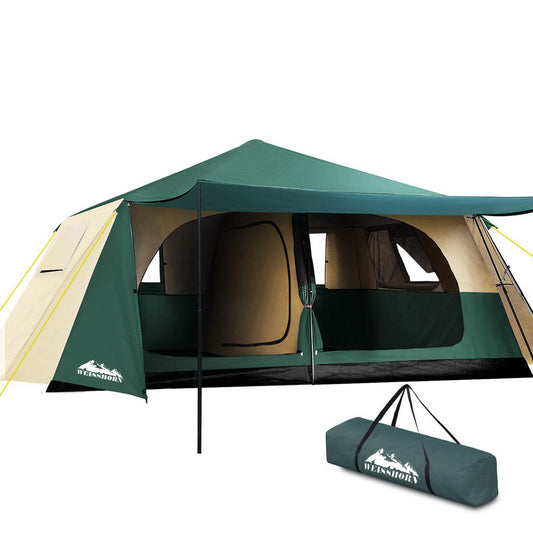
Pitch the tent fully, work gently around seams and coated panels, rinse as required and dry every layer before storage. For detailed fabric-specific steps, see how to clean mould from a tent without damage and how to prevent tent mould.
Canvas swags
Canvas can require different care from synthetic tent fabric. Avoid aggressive scrubbing and harsh household chemicals. Our dedicated guides cover cleaning mould from a swag and preventing swag mould.
Sleeping bags and mattresses
Follow the care label for sleeping bags and removable covers. Foam and self-inflating mattresses should be cleaned only with methods suitable for their fabrics and valves, then dried thoroughly before being rolled. Browse camping sleeping gear if damaged sleep gear needs replacing.
Caravans
Caravan mould has its own mix of hard surfaces, seals and soft furnishings. See how to clean mould in a caravan safely and how to prevent caravan mould.
Store gear dry and ventilated
Keep equipment off damp concrete floors and away from leaks. Sleeping bags are generally better stored loose rather than compressed for months. Tents, swags and fabric gear should only be sealed in storage when they are genuinely dry.
Moisture absorbers can support a dry storage area, but they do not fix wet equipment or a leaking shed.
When replacement makes more sense
Consider replacement when fabric is brittle, waterproof coatings are peeling, seams are failing, foam is deeply contaminated or a strong mould smell remains after careful cleaning and complete drying.
A reliable post-trip routine is simple: unpack damp gear quickly, clean it with the right method, dry every layer and inspect it before long storage.