★★★★★

"Arrived earlier than quoted, Thank you Just Camp for the great service"

Ross

★★★★★

"Website was easy to navigate and I received my purchase promptly"

Brenda

★★★★★

"Purchased for a great price, service was excellent, postage very quick"

Lindy

★★★★★

"Great product and service A++"

Anthony

★★★★★

"My order arrived faster than expected and the quality was just as good as the big name brands"

Aaron

How to Choose Marine Audio, Speakers & Soundbars for Your Boat

Start with the Type of Marine Audio System

A simple boat audio setup might use a marine head unit with passive speakers, while other installations suit an all-in-one soundbar, powered tower speakers or a battery-powered system. Start by deciding where the audio will be used, how much mounting space is available and whether you want a permanently wired or more self-contained setup.

Marine Speakers vs Soundbars

Passive marine speakers can integrate neatly into a boat and let you choose the head unit or amplifier separately. Soundbars combine multiple drivers and amplification in one enclosure, which can simplify installation where a long mounting position is available. Compare the physical dimensions, power requirements, mounting hardware and connectivity of the exact model.

Passive vs Powered Speakers

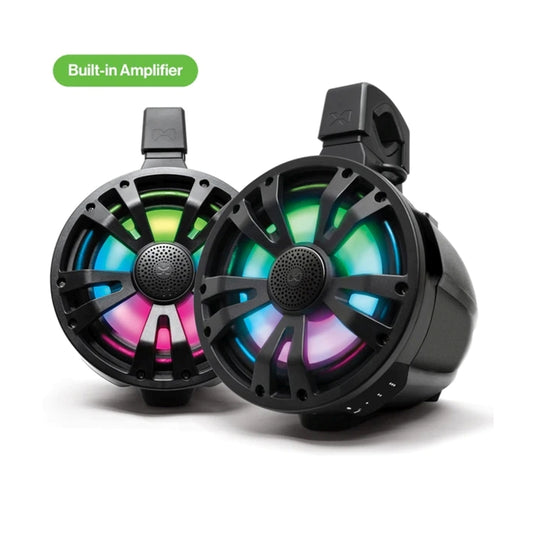
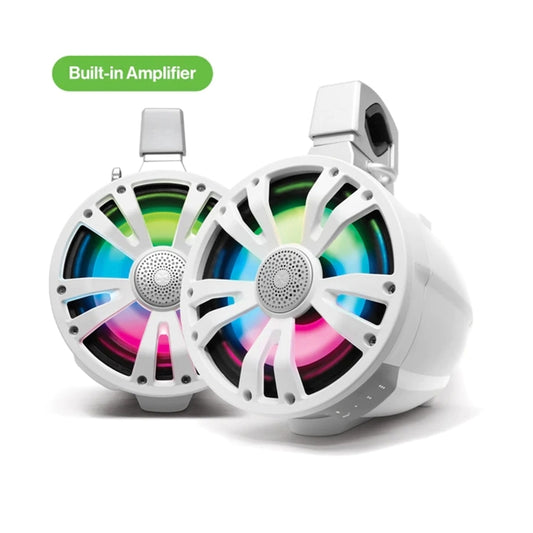
Passive speakers need a compatible amplified source. Powered speakers and soundbars have amplification built in, but still have model-specific power requirements. Some products in the current range use a 12V supply, selected models have rechargeable batteries, and some tower speakers include their own amplifier and battery pack. Check the individual specifications before planning wiring or accessories.

RMS Power, Peak Power and Impedance

For passive speakers, RMS power and impedance are more useful for system matching than peak wattage alone. Match the speaker load to the head unit or amplifier and stay within the manufacturer's recommended operating range. Powered products should instead be checked for their supply voltage, current draw and required protection.

6.5in vs 8in Marine Speakers

The current range includes different speaker sizes, including selected 6.5-inch and 8-inch models. Larger speakers are not automatically the right choice for every boat: measure the mounting area, cut-out or bracket position, depth and surrounding clearance, then compare the exact dimensions and audio specifications.

Understanding IP66, IP67 and IPX7 Ratings

Marine audio products can carry different ingress-protection ratings. These ratings are not interchangeable, and the protection can apply only to a particular part of a product. For example, selected marine head units specify an IPX7 rating for the front panel. Always check what the rating covers and protect rear connections, wiring and installation points according to the manufacturer's instructions.

12V Power, Current Draw and Fuse Protection

Do not assume every powered marine audio product has the same electrical requirements. Current models include different 12V current demands and model-specific fuse, cable and adapter requirements. Size wiring and circuit protection for the actual equipment, cable run and installation, and use appropriately rated components.

Battery-Powered Marine Soundbars

A battery-powered soundbar can be useful when you want fewer permanent power connections or a system that can move between compatible setups. Battery capacity, charging method and runtime vary by model and listening conditions. Treat published runtime figures as guides rather than guarantees, especially at higher volume or when lighting features are used.

Adding a Marine Subwoofer

A subwoofer can add low-frequency output to a compatible system, but it also adds mounting, signal and electrical requirements. The current range includes a powered 8-inch subwoofer, so check input compatibility, available space, 12V current draw, cable size and fuse requirements before adding one to a boat audio setup.

Marine Media Players and Gauge Radios

Marine media players and gauge-style radios can provide a central control point for wired speakers, Bluetooth audio and selected lighting or multi-zone functions. Features vary by model, so compare amplifier output, audio zones, display size, radio functions, inputs, microphone features and the specific ingress rating before choosing a head unit.

Bluetooth, EcoCast and Multi-Zone Audio

Bluetooth is common across the range, while selected EcoXgear products also support EcoCast or multiple audio zones. These features are model-specific and should not be treated as universally compatible. If you plan to link multiple speakers or control separate zones, confirm that the exact products support the same connection method.

RGB Lighting and LED Controllers

Selected speakers, tower systems, soundbars and head units include RGB or LED-control features. Some lighting functions need a compatible controller or model-specific connection, while others are integrated. Check the specifications before buying extra controllers, cables or accessories.

Tower Speakers and Bar-Mount Fit

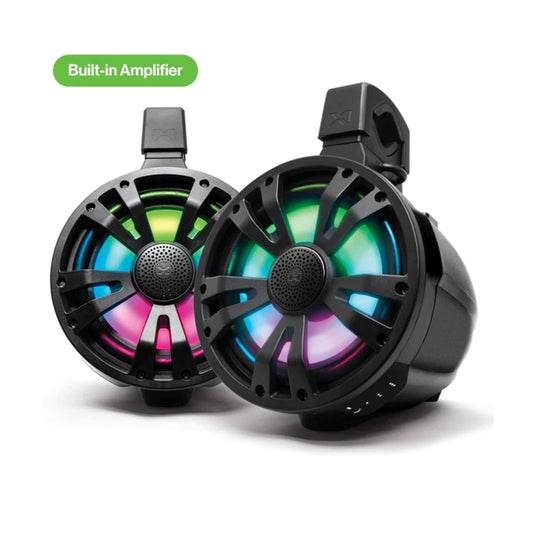
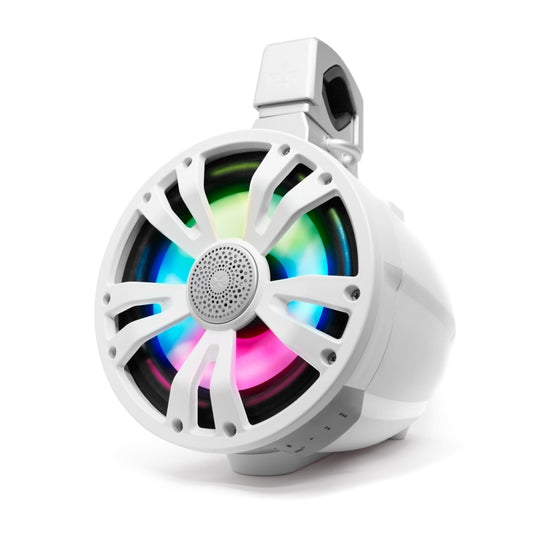
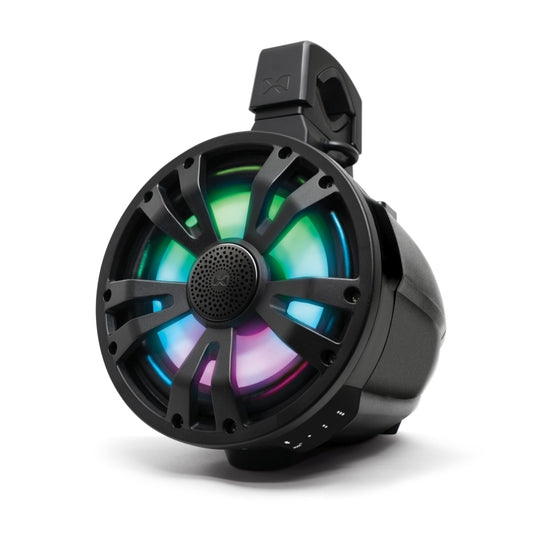
Tower speakers suit installations where a suitable bar or tower is available, but clamp size and clearance matter. Selected current tower models list clamps for round bars from about 1.5 to 3 inches. Measure the actual mounting point and check the supplied bracket range, speaker dimensions and rotation clearance before ordering.

Cables, Brackets, Batteries and Power Accessories

Marine audio accessories are often model-specific. The current range includes mounting brackets, SAE cables and extensions, replacement batteries, vehicle chargers, power supplies and voltage-conversion accessories. Match accessory compatibility, connector type, cable length and electrical rating to the exact soundbar, speaker or head unit.

Installation Around Water, Vibration and Corrosion

A marine-rated product still needs a suitable installation. Mount equipment securely, keep electrical connections protected, route cables away from abrasion and excessive heat, and use corrosion-resistant or manufacturer-specified hardware where required. Recheck mounts, wiring and connectors periodically, particularly after regular use in wet or saltwater environments.

Common Marine Audio Mistakes to Avoid

  • Choosing speakers or a soundbar without measuring the mounting position and clearance.
  • Matching an amplifier to peak watts while ignoring speaker impedance and RMS power.
  • Assuming every marine audio product is waterproof or safe for immersion.
  • Treating a front-panel IP rating as protection for the entire installed head unit.
  • Connecting a powered system without checking voltage, current draw, fuse and cable requirements.
  • Assuming every EcoCast, RGB or LED feature works with every other model.
  • Buying a passive speaker without allowing for a compatible amplifier or amplified head unit.
  • Using a tower-speaker clamp without confirming the bar diameter and mounting clearance.
  • Expecting a battery-powered soundbar to deliver the same runtime at every volume and lighting setting.
  • Leaving exposed connections, loose mounts or damaged cables unchecked in a marine environment.

Explore More Fishing & Boating Gear

Build out the rest of your on-water setup with Fishing & Boating Gear, or browse Boat Seats and Boat Covers for other marine essentials.

Product note: Speaker size, RMS and peak power, impedance, IP rating, amplifier configuration, battery capacity, runtime, Bluetooth version, EcoCast or lighting features, mounting hardware, cable requirements and included accessories vary by model. Check the individual product specifications before ordering.

Safety note: Follow the manufacturer's installation and electrical instructions. Use appropriately rated wiring, fuses, connectors and mounting hardware, keep electrical connections protected from water and abrasion, and use a suitably qualified installer where required. Fixed 240V wiring should be handled by an appropriately licensed electrician in accordance with local requirements.

Guide reviewed: August 2026.

Frequently Asked Questions

What is the difference between marine speakers and regular speakers?

Marine speakers are designed for environments where moisture, spray, UV exposure and vibration may be greater than in a typical indoor audio setup. Construction and ingress protection vary by model, so check the individual product's IP rating, materials and installation requirements rather than assuming every marine speaker offers the same level of protection.

Are marine speakers waterproof?

Not necessarily. Marine audio products can have different ingress-protection ratings, and the rating may apply only to a particular part of the product. Check the individual specifications and protect wiring, connections and installation points as directed by the manufacturer.

Do passive marine speakers need an amplifier?

Yes, passive marine speakers need a compatible amplified audio source, such as a suitable head unit or external amplifier. Match the speaker impedance and RMS power requirements to the amplifier or head unit, and follow the manufacturer's wiring guidance.

What size marine speakers should I choose?

Choose a marine speaker size that fits the available mounting area and suits your audio system. Measure the cut-out, mounting depth and surrounding clearance, then compare those dimensions with the speaker specifications before ordering.

How do I match an amplifier to marine speakers?

Start with the speaker's impedance and RMS power rating rather than relying on peak wattage alone. Choose an amplifier or head unit that is compatible with that load and power requirement, and follow the manufacturer specifications for wiring, channel configuration and protection.

Can a marine soundbar connect directly to a 12V battery?

Some marine soundbars are designed for a 12V supply, while others include an internal rechargeable battery or have different power requirements. Check the individual model's voltage, current draw, fuse and cable requirements before connecting it to a boat or vehicle electrical system.

What do IP66, IP67 and IPX7 mean for marine audio?

These are different ingress-protection ratings for resistance to dust and water exposure. They are not interchangeable, and an IP rating does not mean every connection or part of an installed system can be left unprotected. Check exactly what the rating applies to and follow the manufacturer's installation instructions.

Can I add a subwoofer to a marine audio system?

Yes, if the head unit, soundbar or audio system provides a suitable connection and the electrical system can support the subwoofer's power requirements. Check compatibility, signal inputs, mounting space, current draw and wiring before adding a powered or passive subwoofer.

Do RGB marine speakers need a lighting controller?

It depends on the model and the lighting features you want to use. Some RGB products require a compatible controller for colour and lighting functions, while selected systems have integrated or model-specific lighting control. Check the product specifications and accessory compatibility before ordering.

Can marine soundbars and speakers be used on 4WDs or UTVs?

Selected marine and powersports audio products can suit compatible 4WD, UTV, golf-cart or outdoor installations as well as boats. Check mounting dimensions, clamp sizes, power requirements, weather protection and the manufacturer's intended applications for the exact model.

Popular at Just Camp

1 of 6

Camping Guides, Gear Reviews & Tips for Australia

VIEW ALL CAMPING TIPS