★★★★★

"Arrived earlier than quoted, Thank you Just Camp for the great service"

Ross

★★★★★

"Website was easy to navigate and I received my purchase promptly"

Brenda

★★★★★

"Purchased for a great price, service was excellent, postage very quick"

Lindy

★★★★★

"Great product and service A++"

Anthony

★★★★★

"My order arrived faster than expected and the quality was just as good as the big name brands"

Aaron

How to Choose the Right Boat Cover for Towing and Storage

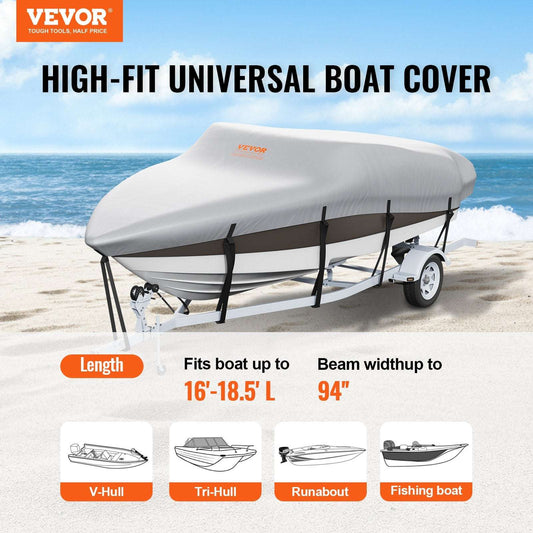
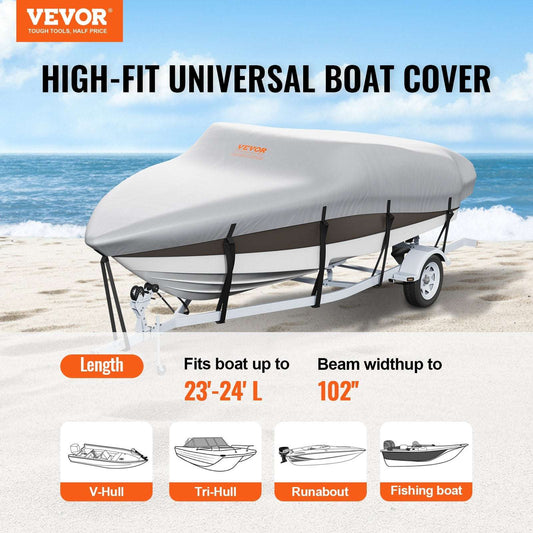
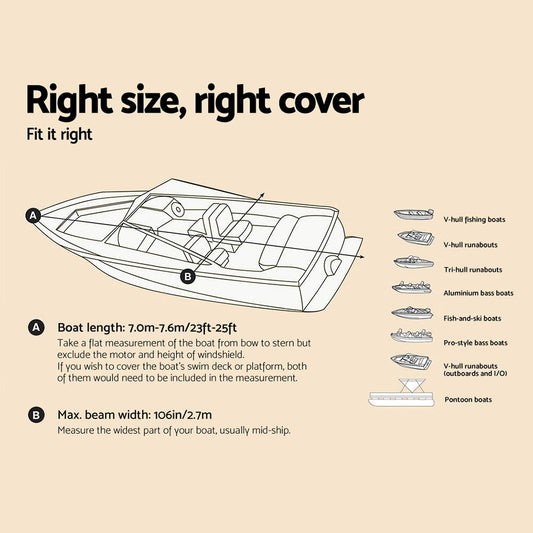
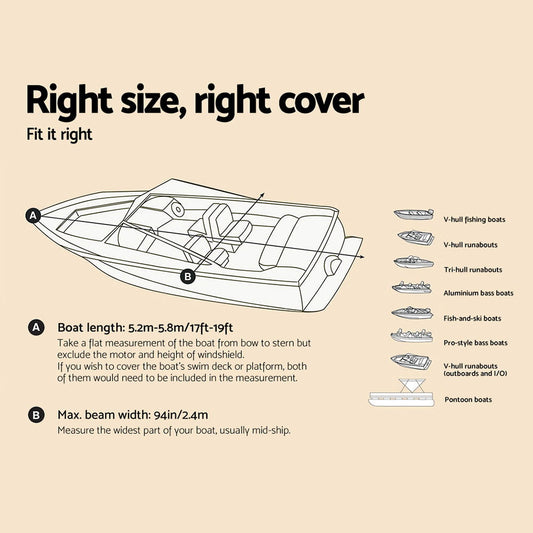
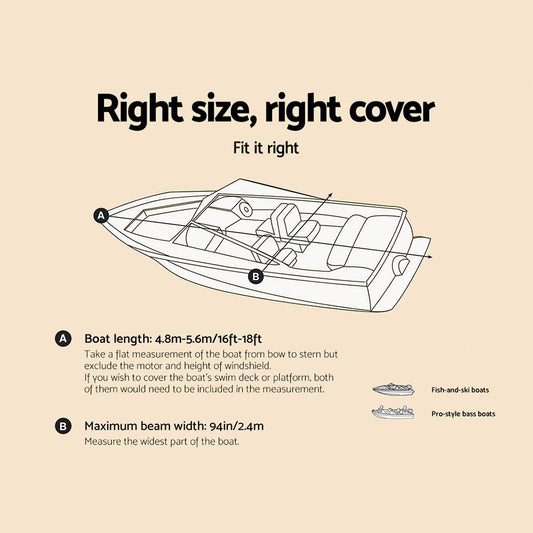
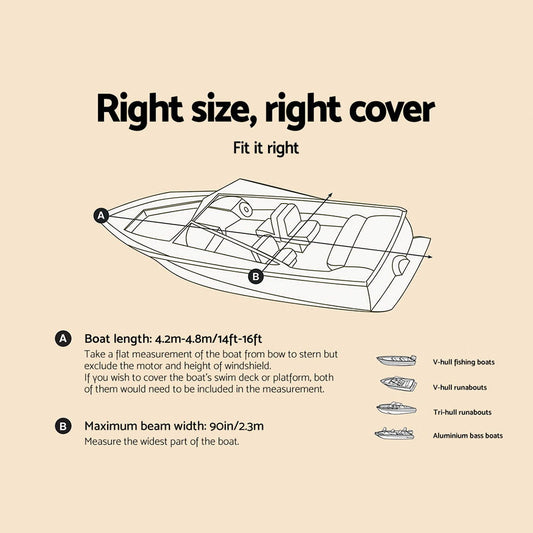
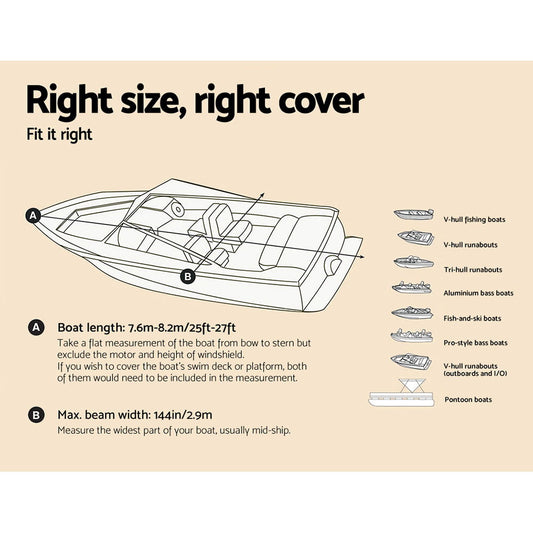
Measure Boat Length and Beam First

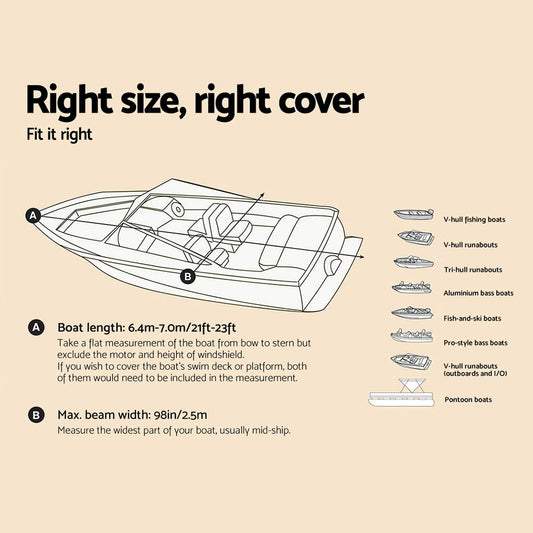
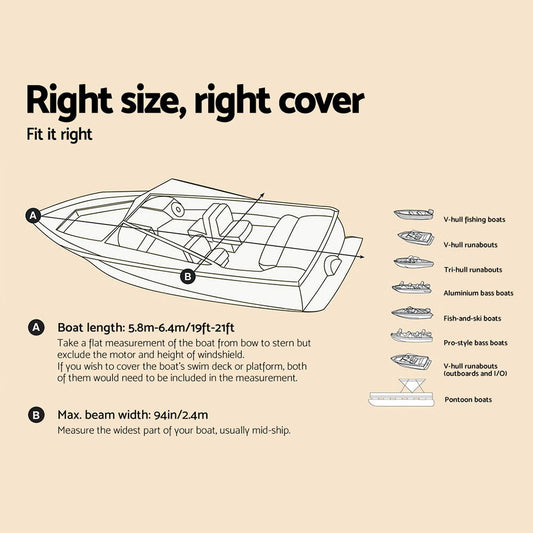
Boat-cover sizing starts with the vessel’s actual dimensions. Measure the overall boat length and maximum beam at the widest point, then compare those figures with the individual cover’s sizing guide. Check any additional dimensions listed for the model, such as height from the gunwale, and follow the manufacturer’s measuring method for outboards, rails, bowsprits and other fittings.

Match the Cover to Your Hull Type

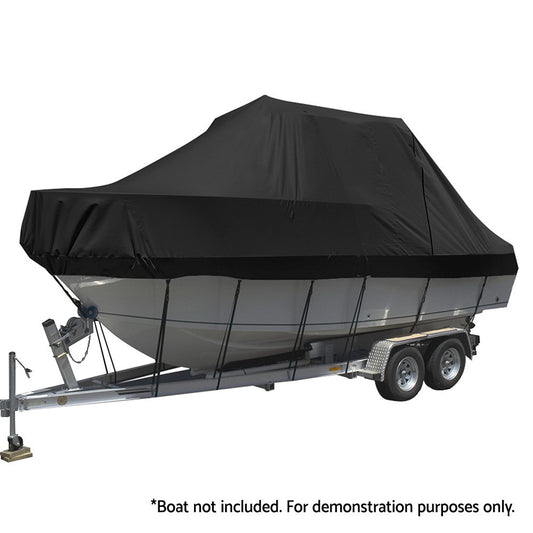
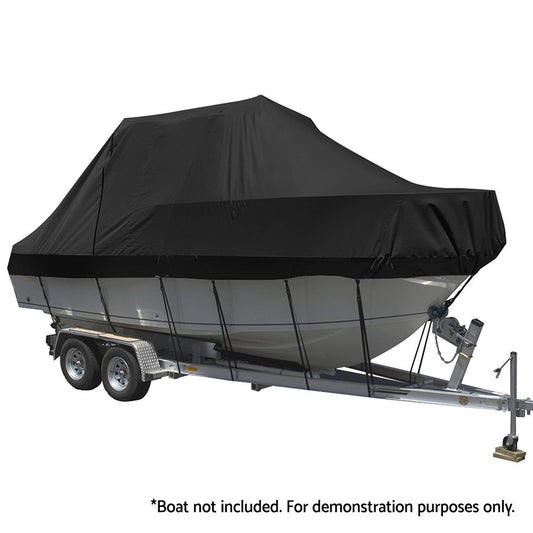
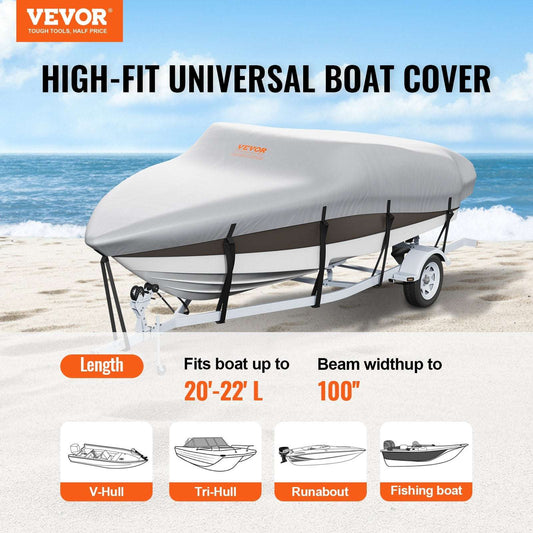
A cover that is the right length can still fit poorly if its shape does not suit the hull. The current range includes covers for V-hull, tri-hull, runabout and fishing boats, plus pontoon-specific options. Check the stated hull compatibility as well as length and beam before choosing.

Trailerable vs Storage Covers

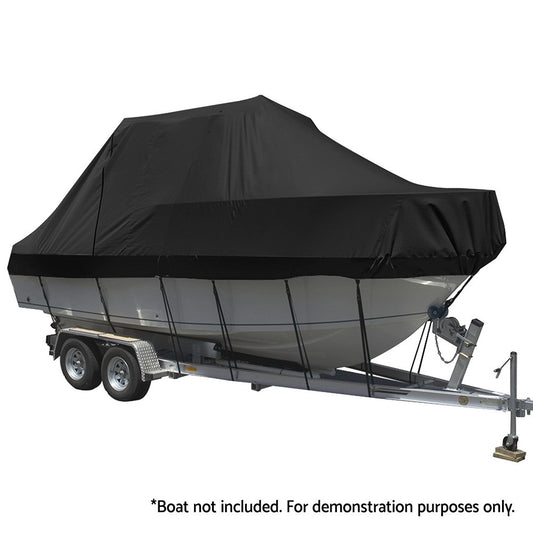
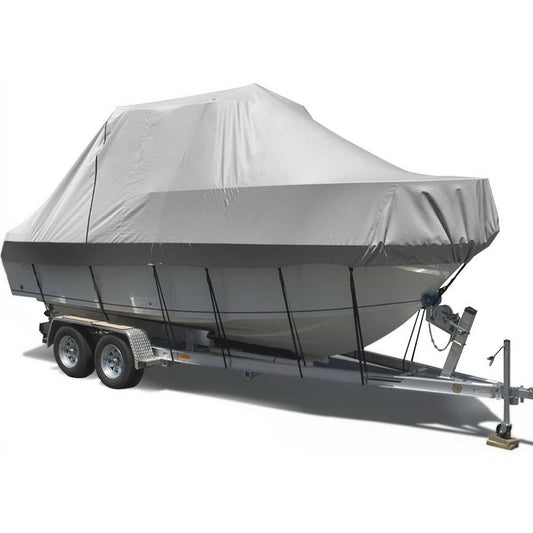
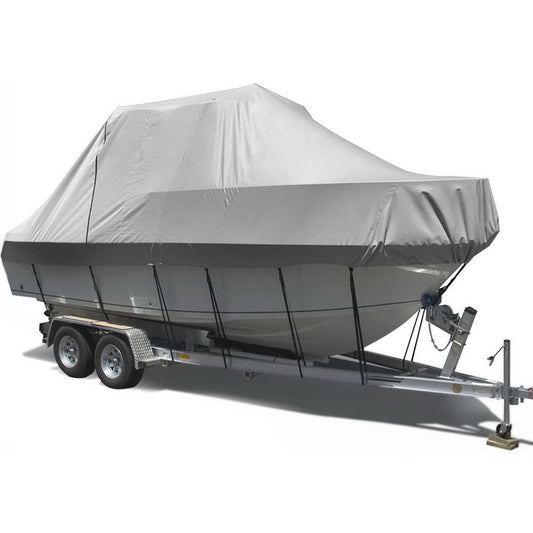
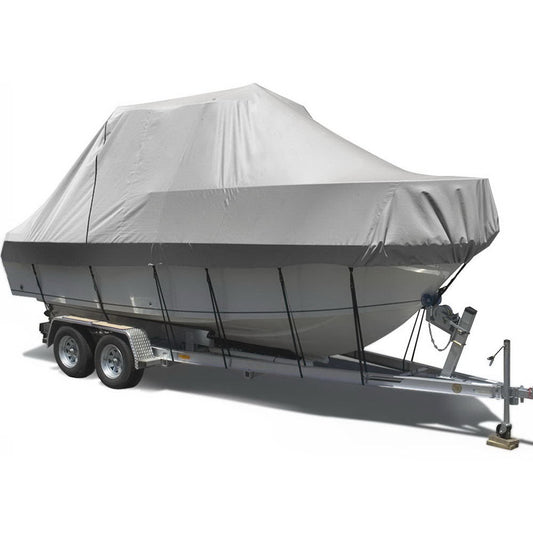
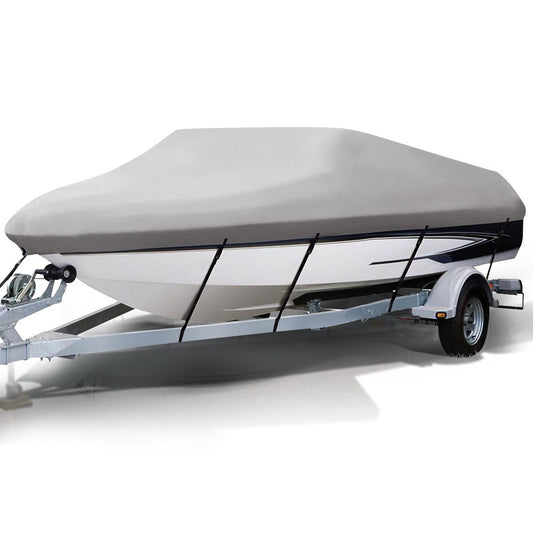
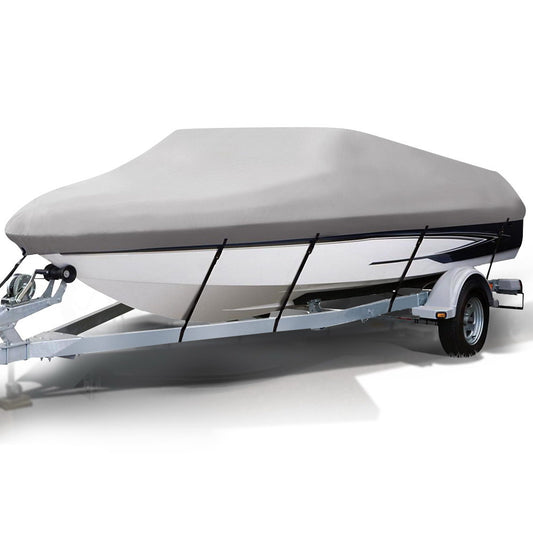
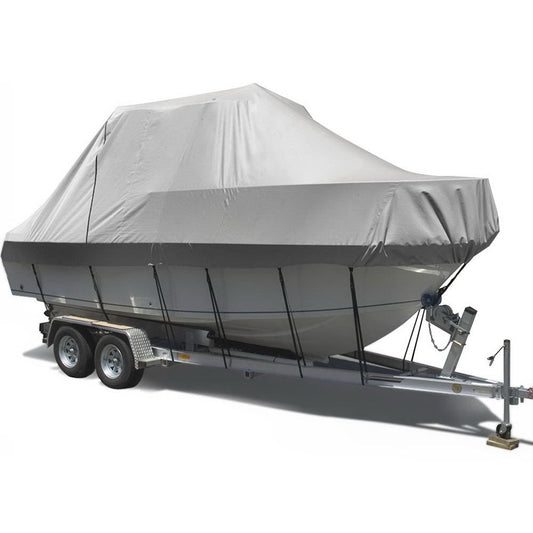
Choose according to how the boat will be protected. A storage cover is intended to shield a stationary boat, while a trailerable cover is designed with road transport in mind. Only tow with a cover when the specific model is described as trailerable, and fit and secure it according to its instructions. Do not assume every outdoor-storage cover is suitable for highway use.

600D vs 800D Boat Cover Fabrics

The range includes 600D and selected 800D polyester or Oxford-fabric covers with PU coatings. The D rating refers to yarn denier, and a higher number does not by itself guarantee better waterproofing, UV resistance or service life. Compare the complete construction, including coating, seams, stitching, fastening system and intended use.

Waterproofing, UV Resistance and Seam Construction

Outdoor covers can help reduce exposure to rain, sun, dust and debris when their material and construction are suited to the conditions. Waterproof and UV-resistant features vary by model. Look beyond the headline fabric weight and check the coating, seam treatment, stitching and product-specific weather-resistance information.

Straps, Elastic Hems and a Secure Fit

A secure fit helps keep the cover in position and reduces loose fabric that can flap in wind or during towing. Models in the range can use adjustable webbing or fastening straps, buckles, heavy-duty loops and elastic hems or cords. The exact fastening system varies, so use the supplied or specified components and follow the individual fitting instructions.

Reduce Water Pooling

Water that collects in low points can place extra load on the cover and its seams. Fit the cover so it sheds water rather than forming deep pockets, and use a compatible support pole or support system when the product instructions call for one. Some covers include a support pole while others do not, so check the individual inclusions.

Boat Covers for Pontoons

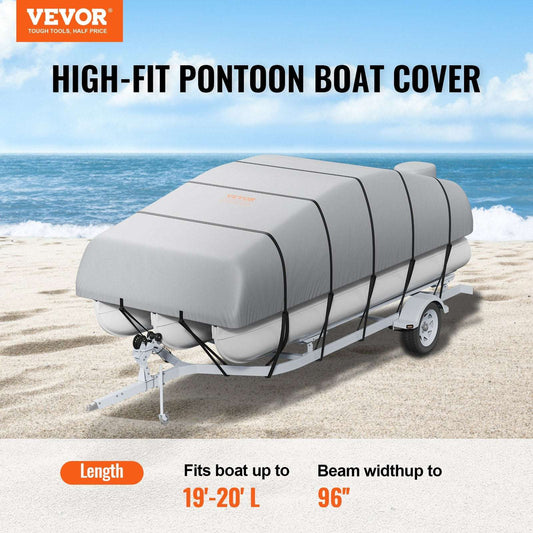
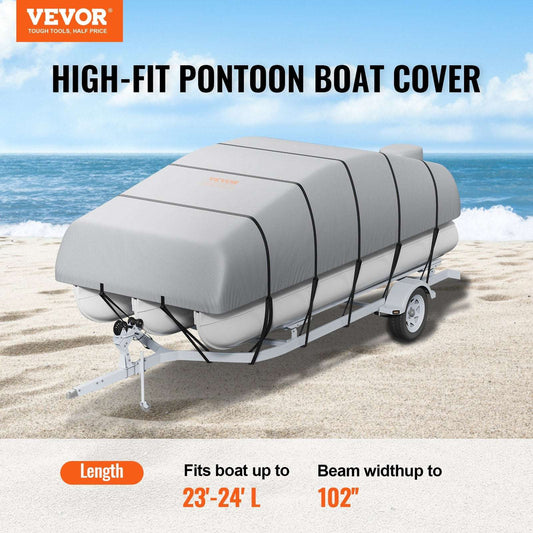
Pontoon boats have a different deck and hull layout from many runabouts and V-hull boats, so a pontoon-specific cover can be the better match. Current pontoon-cover options include dedicated length and width ranges. Measure the pontoon carefully and choose from the model’s stated fit rather than substituting a similarly sized conventional boat cover.

Access, Carry Bags and Other Features

Convenience features vary across the range. Selected Seamanship covers include side-zip access, while many current covers include a carry or storage bag and fastening straps. Some models add a support pole or other accessories. Check the individual product page for exactly what is included and how each feature is intended to be used.

Allow for Outboards, Rails and Boat Accessories

Outboards, bow rails, windscreens, consoles and other fittings can change the shape and dimensions a cover needs to accommodate. Follow the cover manufacturer’s sizing method and check whether these features are included in the stated dimensions. Avoid stretching a cover over sharp or high points in a way that places excessive stress on the fabric.

Cleaning and Storing Your Boat Cover

Follow the care instructions for the fabric and coating. Remove loose dirt and debris, use only cleaning methods suitable for the cover, and allow it to dry fully before folding or packing it away. Regularly inspect straps, seams, buckles and high-wear areas so damage can be addressed before the next storage period or trip.

Common Boat Cover Mistakes to Avoid

  • Choosing by boat length alone without checking maximum beam and hull type.
  • Assuming a storage-only cover is automatically suitable for trailering.
  • Ignoring outboards, rails, consoles or other fittings when measuring the boat.
  • Treating 800D as automatically better than 600D without comparing coating, seams and intended use.
  • Leaving fastening straps loose enough to flap or rub during transport.
  • Allowing rainwater to collect in deep pockets instead of supporting the cover to shed water.
  • Assuming every cover includes a support pole, side zip, storage bag or the same fastening hardware.
  • Stretching the fabric tightly over sharp or raised fittings without following the cover instructions.
  • Packing the cover away while it is still damp.
  • Using a cover outside the size, hull type or use conditions specified for that model.

Complete Your Fishing & Boating Setup

Boat covers are one part of protecting and preparing your vessel. Return to Fishing & Boating Gear to browse the wider range of boating, marine and fishing equipment.

Product note: Boat length and beam ranges, hull compatibility, fabric weight, coatings, waterproof and UV-resistant features, fastening systems, support poles, access zips and included accessories vary by model. Check the individual product specifications and sizing information before ordering.

Use note: Use a cover for towing only when the specific model is intended for trailering. Fit and secure the cover according to the manufacturer’s instructions, inspect straps and fastenings before travel, and recheck them during longer trips.

Guide reviewed: August 2026.

Frequently Asked Questions

Are boat covers worth it?

A well-fitted boat cover can help protect exposed surfaces from sun, rain, dust, leaves and general grime while the boat is stored between trips. The level of protection depends on the cover material, coating, fit, fastening and how the boat is stored, so choose a cover suited to the vessel and intended use.

How do I choose the right boat cover size?

Measure the boat and compare its overall length and maximum beam with the sizing information for the individual cover. Also check the stated hull types, height or gunwale clearance where provided, and the manufacturer’s instructions for items such as outboards, rails or other fittings. Choose by the actual measurements rather than boat length alone.

Can I tow a boat with the cover on?

Only use a boat cover for road transport when the specific model is designed or rated as trailerable. Fit it according to the product instructions, use the supplied or specified fastening system, remove or secure anything that can flap or come loose, and check the cover and straps during the trip. A storage-only cover should not be assumed suitable for towing.

What is the difference between a 600D and 800D boat cover?

The D rating refers to the denier of the fabric yarn. An 800D fabric generally uses heavier yarn than 600D, but denier alone does not determine how protective or durable a cover will be. Compare the fabric construction, PU coating, stitching, seam treatment, UV resistance, fastening system and intended use of the individual cover as well.

How do I measure my boat for a cover?

Measure the vessel’s length and maximum beam at its widest point, then compare those figures with the cover’s sizing guide. Check any additional dimensions listed for the model, such as height from the gunwale. Follow the manufacturer’s measuring method for outboards, bowsprits, rails, consoles and other fittings because these may be treated differently between covers.

Do boat covers fit V-hull, tri-hull and runabout boats?

Some covers in the range are designed for V-hull, tri-hull, runabout or fishing boats, while pontoon boats have different cover shapes and sizing. Compatibility varies by model, so match the stated hull type as well as the boat’s length, beam and other dimensions before choosing a cover.

Do I need a support pole under my boat cover?

A suitable support pole or support system can help create a higher point so rain is less likely to pool on a fitted cover. Some boat covers include a support pole and others do not. Use only a support method that suits the cover and boat, and follow the individual product instructions so the fabric is not overstressed or damaged.

How should I secure a boat cover for trailering?

Use a cover specifically intended for trailering and follow its fastening instructions. Adjustable straps, buckles, loops and an elastic hem can help keep suitable models secure, but the exact system varies. Make sure straps are correctly tensioned with no loose ends that can flap, and inspect the cover and fastenings before travel and during longer trips.

Can a boat cover stay on outside in the rain and sun?

A cover intended for outdoor storage can help shield a boat from rain, UV exposure, dust and debris, but protection varies by material, coating, seams, fit and condition. Check the individual cover’s weather and UV specifications, keep it securely fitted, avoid prolonged water pooling, and inspect the fabric and fastenings periodically.

How do I clean and store a boat cover?

Follow the care instructions for the individual fabric and coating. Remove loose dirt and debris, use only cleaning products or methods suitable for the cover, and allow it to dry fully before folding it into a carry or storage bag. Storing a damp cover can encourage odours, mildew or fabric deterioration.

Popular at Just Camp

1 of 6