★★★★★

"Arrived earlier than quoted, Thank you Just Camp for the great service"

Ross

★★★★★

"Website was easy to navigate and I received my purchase promptly"

Brenda

★★★★★

"Purchased for a great price, service was excellent, postage very quick"

Lindy

★★★★★

"Great product and service A++"

Anthony

★★★★★

"My order arrived faster than expected and the quality was just as good as the big name brands"

Aaron

How to Choose and Install EVA Foam Boat Flooring

Choose the Right EVA Foam Format

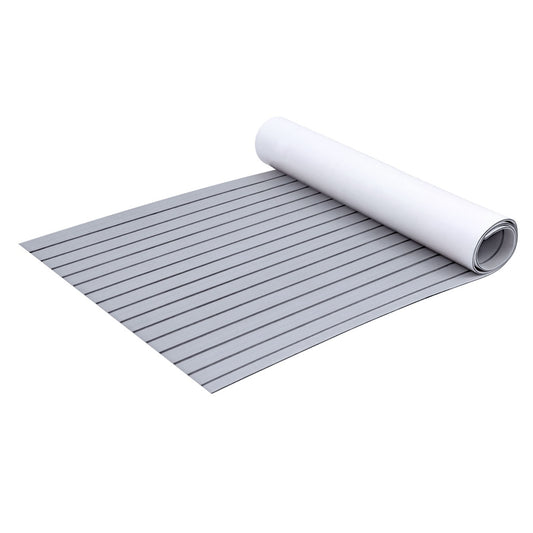
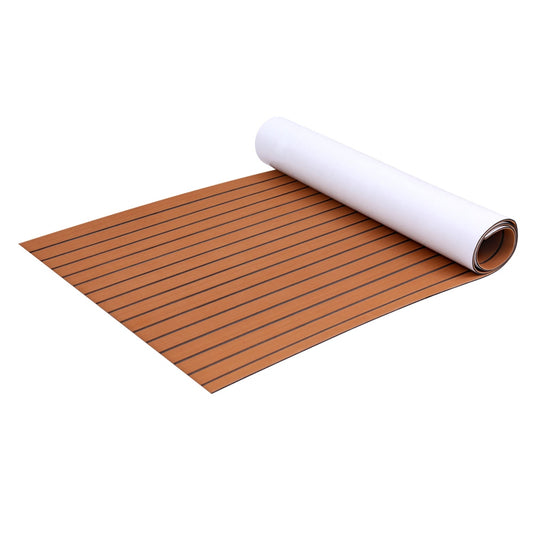
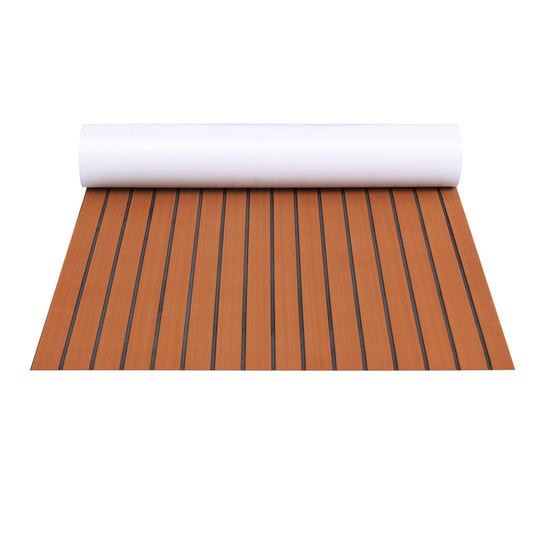
EVA foam marine decking can refresh a worn boat floor while adding cushioning and a textured surface underfoot. The products currently in this collection are approximately 6mm thick and use self-adhesive backing, but the available formats suit different jobs.

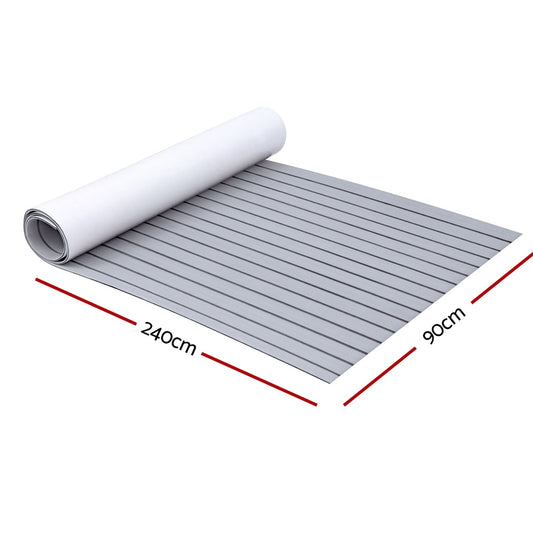
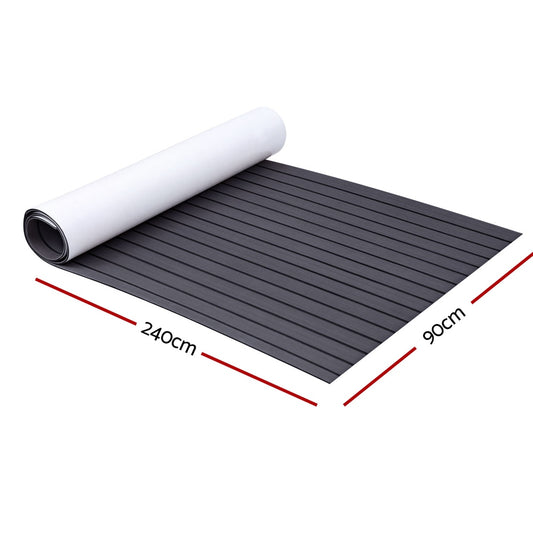
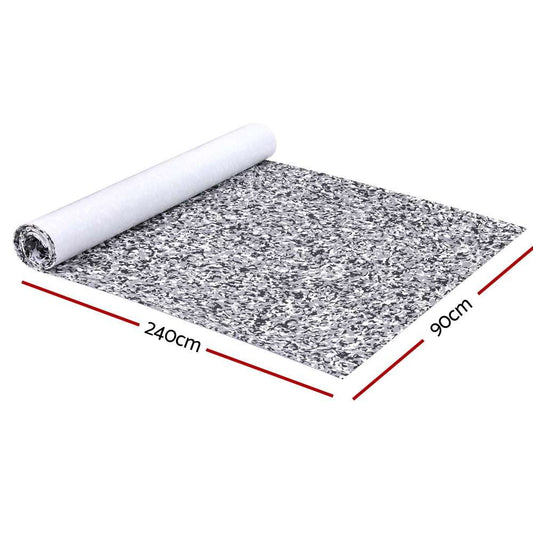
  • 240 x 90cm full-width mats cover up to 2.16 square metres before cutting and suit larger deck runs.
  • 240 x 45cm faux-teak sheets cover up to 1.08 square metres and can be easier to position across narrower sections.
  • 120 x 30cm sheets cover up to 0.36 square metres and suit smaller platforms, steps, lids or detailed areas.
  • 240 x 5.7cm border trims are narrow finishing strips for selected edges, transitions and perimeter details.

Compare the exact dimensions, colour, groove direction and included components on each product page. Border strips are sold separately from the larger sheets and are not a substitute for the main flooring.

Measure Before You Order

Start with a simple deck plan. Divide the floor into separate sections around consoles, seats, hatches, storage lids and swim platforms, then measure the longest and widest points of each section. For irregular areas, make a paper or cardboard template rather than relying only on total square metres.

Add allowance for trimming, pattern alignment, joins and mistakes. Ordering only the exact mathematical area can leave you short once curved edges and cut-outs are considered. Where a consistent colour and finish matters, plan the full project before ordering rather than adding isolated pieces later.

Plan the Groove Direction and Seams

The striped and faux-teak patterns create a more finished result when their lines run consistently. Before cutting, decide whether the pattern will follow the boat’s centreline, run fore and aft, or align with an existing deck feature. Dry-lay the sheets with the backing still attached and mark every seam.

Place joins where they can be aligned neatly and where they will not interfere with hinges, drains or frequently opened hatches. Matching border trim can help finish selected exposed edges, but it should be planned as part of the layout rather than added to hide inaccurate measurements.

Prepare the Deck Surface Properly

Self-adhesive flooring depends on the condition of the surface underneath it. Remove old carpet, loose glue, wax, grease, salt, dirt, flaking paint and corrosion. Repair unstable or damaged areas before covering them. The final surface should be firm, smooth, clean, dust-free and completely dry.

Use cleaning products that are appropriate for the deck material and do not leave an oily residue. Allow the surface to dry fully, especially around seams, rivets and recessed areas. If the coating, paint or previous treatment is uncertain, test a small inconspicuous area before committing to the complete installation.

Make Templates and Test-Fit Every Piece

Use paper or cardboard templates around hatches, cleats, consoles, seat bases, drains and curved edges. Transfer the shape to the back of the EVA sheet and cut with a sharp utility knife or suitable scissors. Several controlled passes with a sharp blade usually give a cleaner edge than forcing one deep cut.

Test-fit every piece while the release liner is still attached. Confirm that hatches can open, fasteners remain accessible and drainage paths are not blocked. Do not cover inspection points, labels or hardware that may need future servicing.

Install the Peel-and-Stick Backing Carefully

Once the layout is confirmed, peel back only a small section of the liner, align the piece and press it into place gradually. Work across the sheet with firm, even pressure to reduce trapped air and avoid stretching the foam. Removing the entire liner at once makes a large sheet much harder to control.

Follow the individual product instructions for suitable installation conditions and curing time. Avoid installing onto a damp, contaminated or unstable surface. Self-adhesive decking is intended to bond firmly, so accurate positioning before full contact is important.

Understand Grip, Comfort and Water Resistance

The grooved or brushed EVA surface is designed to provide cushioning and improve traction compared with a bare smooth deck. No marine flooring is slip-proof in every condition. Fish slime, oil, sunscreen, mud and loose sand can still reduce grip, so keep the surface clean and use normal care when the deck is wet.

EVA foam is water-resistant, but the completed installation is not a waterproofing system. Water can still reach joins, edges, fittings and the deck beneath. Maintain drainage and repair leaks, corrosion or structural damage before installing cosmetic flooring.

Choose Colour with Sun and Maintenance in Mind

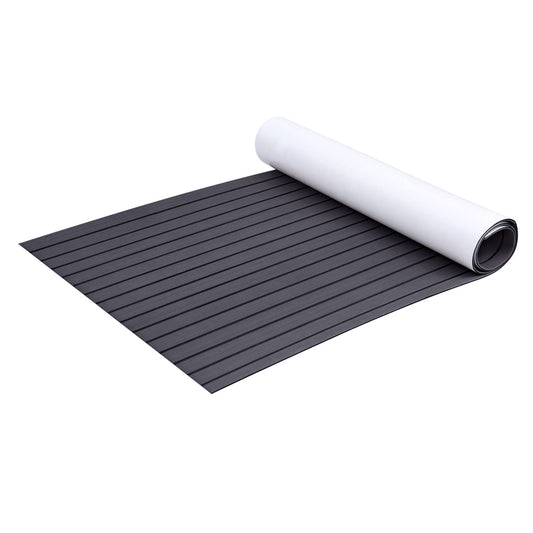
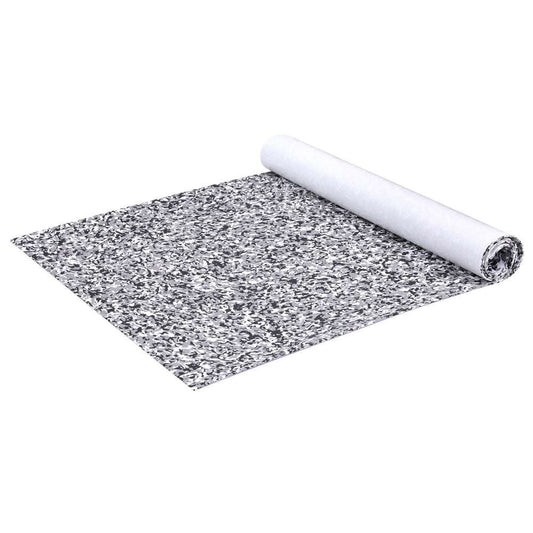
Grey, brown, gold and camouflage finishes can change the look of a boat, caravan or RV, but colour also affects day-to-day use. Darker surfaces can absorb more heat in direct sun, while lighter finishes may show dirt and marks sooner. Consider shade, climate, barefoot use and how often the area will be cleaned.

Products in the current range are described as weather-resistant or UV-resistant, depending on the item. Exposure, cleaning products, traffic and installation quality can still affect appearance and service life. Check the specifications of the exact product rather than assuming every finish performs identically.

Clean and Inspect the Flooring Regularly

Rinse away salt, sand and loose dirt with fresh water. For a deeper clean, use mild soap with a soft cloth or brush, then rinse thoroughly. Avoid harsh solvents, fuel, aggressive degreasers and abrasive tools unless the product instructions specifically approve them. Test an unfamiliar cleaner on a small hidden area first.

Avoid dragging sharp or heavy equipment across the foam. Periodically inspect seams and exposed edges, especially around high-traffic areas and hatches. Address lifting edges or trapped moisture early rather than allowing dirt and water to work underneath.

Common EVA Boat Flooring Mistakes to Avoid

  • Ordering only the exact deck area without allowing for cuts, joins and pattern matching.
  • Installing over old carpet, loose adhesive, corrosion, flaking paint or trapped moisture.
  • Peeling the entire backing from a large sheet before it is aligned.
  • Cutting before confirming the direction of grooves or faux-teak lines.
  • Stretching the foam during installation and creating tension at the edges.
  • Covering drains, hinges, fasteners or access panels.
  • Assuming water-resistant foam makes the deck watertight.
  • Using harsh chemicals without checking compatibility.
  • Choosing a dark colour without considering heat in direct sunlight.
  • Skipping a full dry layout and template test before bonding.

Complete Your Boat Setup

Explore the broader Fishing & Boating Gear range, add practical equipment from Boating Accessories, or compare Boat Seats and Boat Covers for the rest of your setup.

Product note: Dimensions, backing, surface finish and resistance claims are based on the current product information and can vary between items. Read the individual product page and supplied instructions before measuring, cutting or installing.

Guide reviewed: August 2026.

Frequently Asked Questions

Is EVA foam boat flooring suitable for aluminium tinnies?

Yes, EVA foam flooring can be installed in aluminium tinnies when the deck is firm, smooth, clean, completely dry and suitable for adhesive bonding. Remove loose paint, corrosion, old glue and contaminants first, and test a small area if the surface coating or previous treatment is uncertain.

Are the EVA foam boat flooring sheets self-adhesive?

Yes. The EVA foam mats, faux-teak sheets and border trims in this range use peel-and-stick self-adhesive backing. Prepare the surface carefully before installation and check the product specifications for the exact sheet or trim you are buying.

Can EVA foam marine decking be cut around hatches and fittings?

Yes. EVA foam can be trimmed around hatches, cleats, consoles, drains and other fittings using a sharp utility knife or suitable scissors. Make a paper or cardboard template and test-fit every piece before removing the adhesive backing.

How should I prepare a boat deck before installing EVA foam?

Remove old carpet, loose adhesive, dirt, grease, wax, salt and flaking paint. Repair damaged or corroded areas, then leave the surface smooth, dust-free and completely dry. Follow the product instructions and avoid installing over trapped moisture or an unstable surface.

Is EVA foam boat flooring waterproof?

EVA foam is water-resistant and designed for wet marine environments, but an installed floor is not a waterproofing system. Water can still reach seams, edges, fittings or the substrate, so maintain drainage and repair leaks or deck damage before installation.

How do I calculate how many EVA foam sheets I need?

Measure each deck section separately, sketch the layout and account for the direction of grooves or faux-teak lines. A 240 x 90cm mat covers 2.16 square metres, a 240 x 45cm sheet covers 1.08 square metres and a 120 x 30cm sheet covers 0.36 square metres before cuts. Add allowance for irregular shapes, seams, matching and mistakes.

What are EVA faux-teak border trims used for?

Border trims are narrow matching strips used to finish exposed edges, transitions, steps or selected perimeter areas. They can create a neater visual finish, but the best layout depends on the deck shape and they are not required for every installation.

How should EVA foam boat flooring be cleaned?

Rinse off salt, sand and loose dirt with fresh water, then use mild soap with a soft cloth or brush when needed. Avoid harsh solvents, fuel, aggressive degreasers and abrasive tools unless the product instructions specifically approve them. Test any cleaner on a small hidden area first.

Can EVA foam flooring be installed over old boat carpet?

It is generally better to remove old carpet and adhesive rather than bonding EVA foam over them. The self-adhesive backing needs a stable, smooth and clean surface. Any soft, loose or damaged layer underneath can reduce adhesion and leave an uneven finish.

Does dark EVA foam boat flooring get hot in direct sunlight?

Dark surfaces can absorb more heat than lighter colours and may become hot in strong direct sun. Consider where the flooring will be used, whether the deck is shaded and how it feels underfoot in your conditions before choosing a colour.

Popular at Just Camp

1 of 6