★★★★★

"Arrived earlier than quoted, Thank you Just Camp for the great service"

Ross

★★★★★

"Website was easy to navigate and I received my purchase promptly"

Brenda

★★★★★

"Purchased for a great price, service was excellent, postage very quick"

Lindy

★★★★★

"Great product and service A++"

Anthony

★★★★★

"My order arrived faster than expected and the quality was just as good as the big name brands"

Aaron

Choosing Jackery Power Stations, Solar Panels & Expansion Batteries

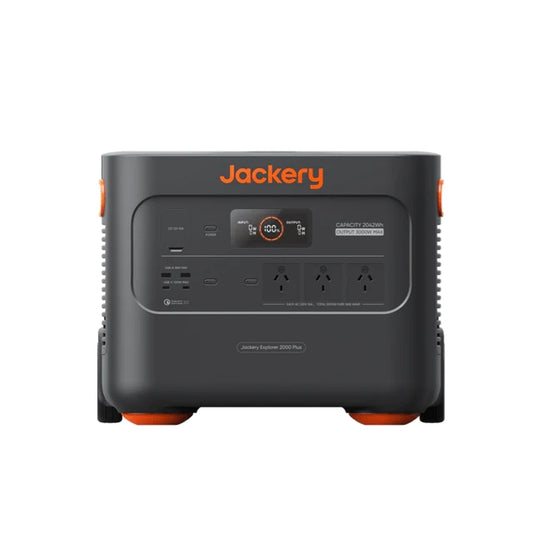
Jackery combines rechargeable Explorer portable power stations with SolarSaga portable solar panels and selected expansion batteries, giving campers and tourers several ways to build a battery-based off-grid power setup. The right combination depends on the equipment you need to run, the energy you need to store and how you plan to recharge.

Start With the Equipment You Need to Power

List the devices you expect to use and check their input voltage, normal running wattage and any short startup or surge demand. Also decide which devices need to run at the same time. This helps separate a light USB-charging setup from one that needs 230V AC output for larger compatible appliances.

Where a device can run directly from a suitable USB or 12V DC output, you may not need to use AC conversion. Always match the device requirements to the ports and ratings on the exact Jackery model.

Compare Jackery Explorer Power Stations by Use, Not Just Size

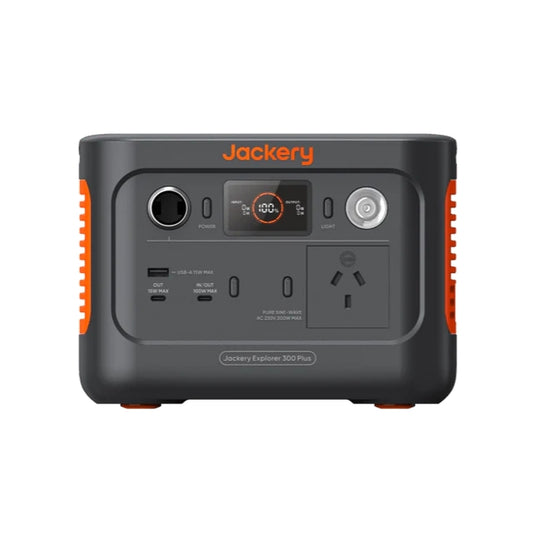
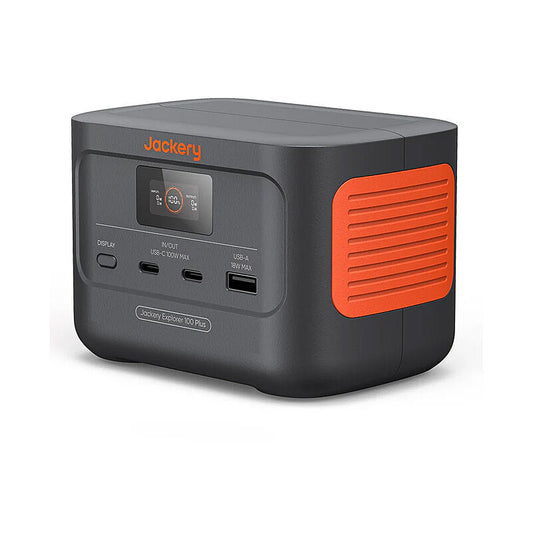
The current range spans compact portable power through to much larger systems. The Explorer 100 Plus is a lightweight USB-focused option and does not include a 230V AC outlet. The Explorer 300 Plus adds AC output in a compact format, while larger Explorer models provide substantially more stored energy and higher AC output for more demanding setups.

Larger capacity can extend useful runtime, but it also increases size and weight. Compare the complete specifications rather than assuming the biggest unit is automatically the best choice for a vehicle, caravan or campsite.

Watt-Hours and Watts Measure Different Things

Battery capacity is normally shown in watt-hours (Wh). This describes stored energy. Output is shown in watts (W) and describes how much power a port or inverter can supply. A power station can have a large battery without necessarily supporting every high-wattage appliance, so both figures matter.

For a rough runtime comparison, stored Wh can be considered against the device's W draw, but real runtime is lower or different once conversion losses, battery-management limits, cycling loads, temperature and operating conditions are included.

Check Continuous Output and Startup Demand

For equipment using an AC outlet, compare the appliance's normal running load with the power station's continuous or rated AC output. Some appliances with compressors, motors or other starting loads can briefly demand more power when they start, so also check the model's stated surge or peak capability and the appliance requirements.

Do not treat a surge figure as an ongoing output rating, and do not assume that every appliance below the headline wattage will automatically be compatible.

Battery Chemistry and Cycle Life Vary by Model

Jackery power stations in this collection do not all use the same battery chemistry or carry the same cycle-life specification. Selected current models use LiFePO4 cells, while other Explorer models use different lithium-ion battery designs. Check the exact listing for chemistry, cycle-life guidance and operating-temperature information.

Choose the Ports You Actually Need

USB-C, USB-A, 12V car-style outputs, DC outputs and 230V AC outlets vary across the Explorer range. If most of your equipment is USB-powered, a compact model may be more practical than carrying a larger AC-focused unit. For caravan or camping equipment, confirm the voltage and connector needed before relying on a particular port.

SolarSaga Panels for Portable Solar Charging

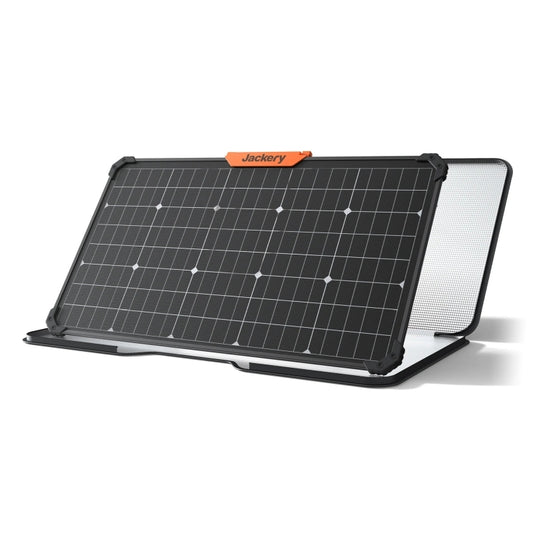
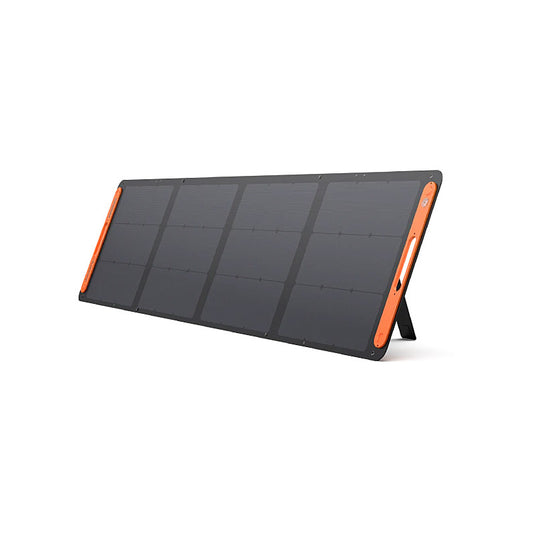
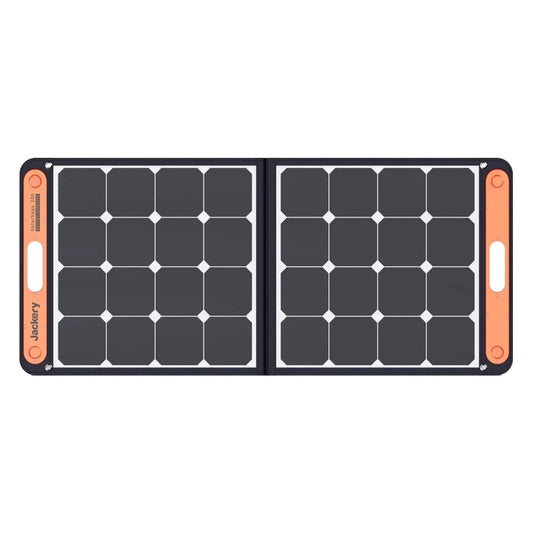
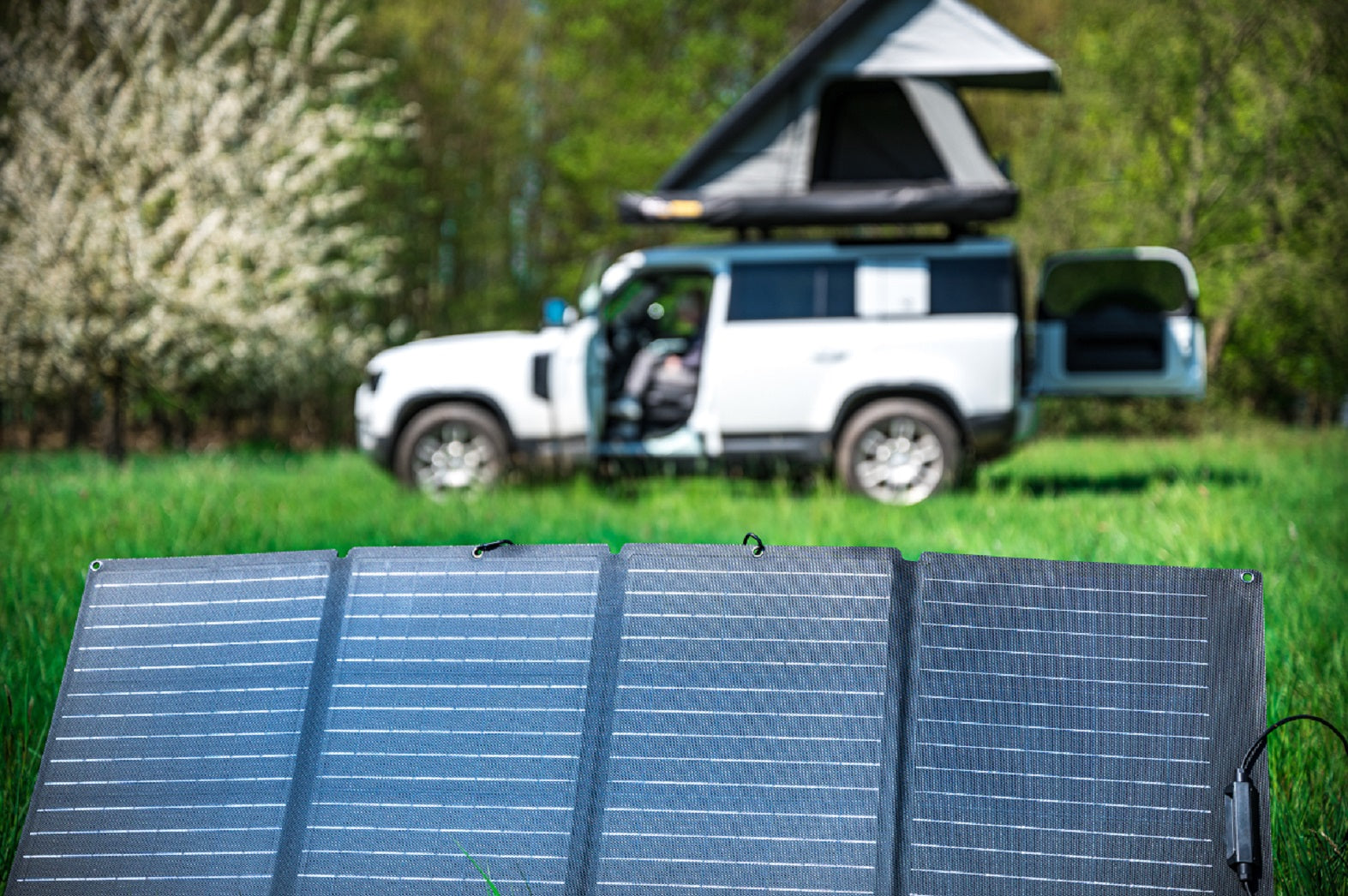
The current SolarSaga range includes portable panels with different peak wattages and designs, including 80W and 200W bifacial options and a 100W foldable panel. Some panels also provide direct USB outputs. Construction, connectors, weight, folded dimensions and ingress ratings vary by model.

Solar-panel wattage is a peak rating under specified conditions. Real output changes with sunlight, sun angle, cloud, temperature, shading, panel position and the connected equipment, so allow for lower field output when planning recharge time.

Match Solar Input to the Exact Explorer Model

Do not assume that a SolarSaga panel is automatically suitable for every Jackery power station simply because both products are from the same brand. Check the power station's permitted solar-input voltage and wattage, the connector arrangement and any supported multi-panel configuration before connecting equipment.

For a wider range of portable charging options, explore 12V Solar.

Expansion Batteries Are Model-Specific

Expansion batteries add stored energy to selected compatible Explorer systems, but they are not universal accessories. The current Explorer 2000 Plus expansion battery is designed for the compatible Explorer 2000 Plus system and is not a standalone power station.

Before ordering an expansion battery, confirm the exact compatible main unit, connection method and supported system configuration. Do not choose an expansion battery from capacity alone.

Plan How You Will Recharge

Recharging options can include mains AC, vehicle charging and compatible solar input depending on the Explorer model. Input limits and approximate recharge times differ between products, and solar recharge time changes with real solar conditions. Check what charging cables or adapters are included with the exact product rather than assuming every accessory is supplied.

Camping Fridges and Other Appliances

A Jackery power station may run a compatible camping fridge or other appliance when the selected output matches the device voltage, running wattage and startup demand. If a fridge supports suitable 12V DC operation, using a compatible 12V output can avoid unnecessary AC conversion.

Runtime will depend on the fridge's actual cycling behaviour, ambient temperature, thermostat setting, battery capacity and other connected loads. Use product specifications for planning rather than a single universal runtime estimate.

Portability Matters as Capacity Increases

Compact Explorer models are easier to carry and store but hold less energy and may have lower output. Higher-capacity systems can suit longer stays or heavier loads but require more vehicle space and can be much heavier. Compare dimensions and weight alongside electrical performance before deciding what belongs in your touring setup.

Protect Power Stations and Panels Appropriately

Ingress-protection ratings shown for selected SolarSaga panels do not automatically apply to the power stations. Keep electrical equipment protected from water, impact, excessive heat and other conditions outside the manufacturer's instructions. Inspect cables and connectors before use and stop using damaged equipment.

Common Jackery Setup Mistakes to Avoid

  • Choosing by battery capacity without checking the required output wattage.
  • Treating surge or peak output as the normal continuous rating.
  • Forgetting to check appliance startup demand.
  • Assuming every Explorer model includes the same AC, USB and 12V outputs.
  • Assuming every SolarSaga panel is compatible with every Explorer power station.
  • Using a solar-panel peak wattage as a guaranteed real-world charging rate.
  • Buying an expansion battery without confirming the exact compatible Explorer model.
  • Treating an expansion battery as a standalone power station.
  • Estimating runtime without allowing for conversion losses and changing loads.
  • Assuming an IP rating on a solar panel also applies to the connected power station.

Compare Jackery With the Wider Camp Power Range

If you want to compare Jackery with other off-grid power options, browse Generators & Inverters, or return to 12V Camping Power for batteries, charging, solar and related equipment.

Product note: Capacity, battery chemistry, cycle life, continuous and surge output, ports, solar-input limits, charging times, compatibility, ingress protection, dimensions, weight and included accessories vary by model. Check the individual product specifications before ordering or connecting equipment.

Safety note: Follow the power-station, solar-panel, battery and appliance manufacturers' instructions. Keep electrical equipment appropriately protected from water and damage, use only compatible connections and charging arrangements, and do not modify or bypass battery or electrical protection systems.

Guide reviewed: August 2026.

Frequently Asked Questions

What is a Jackery portable power station?

A Jackery portable power station is a rechargeable battery-based power source designed to provide compatible USB, DC and, on selected models, 230V AC output away from mains power. Capacity, output, ports, battery chemistry and charging methods vary by model, so choose from the specifications of the exact Explorer unit rather than the brand name alone.

Which Jackery power station is best for camping?

The best size depends on what you need to power, how long you will be away and how easily you need to carry the unit. Start by listing each device's voltage, running wattage and any startup demand, then compare that with the power station's output, battery capacity, ports and weight. Compact models suit lighter charging needs, while larger Explorer models provide more stored energy and AC output.

Can a Jackery power station run a camping fridge?

Potentially, provided the fridge's input voltage, running wattage and any startup demand are compatible with the selected Jackery model and output being used. If the fridge supports a suitable 12V DC input, that may avoid converting battery power to 230V AC. Check the exact fridge and power-station specifications before connecting them, and remember that runtime depends on the actual load and operating conditions.

Can I recharge a Jackery power station with a SolarSaga panel?

Selected Jackery Explorer models support solar charging with compatible SolarSaga panels, but the permitted input voltage, wattage, connector arrangement and panel configuration vary by model. Check the exact power station's solar-input limits and the panel specifications before connecting them rather than assuming every Jackery panel works with every Explorer model.

Which Jackery SolarSaga panel should I choose?

Choose according to the solar input supported by your power station, the panel's output and connector requirements, and how much size and weight you are comfortable carrying. The current range includes portable SolarSaga options with different peak wattages and panel designs. Check compatibility with the exact power station before ordering or combining panels.

Can every Jackery expansion battery work with every Explorer power station?

No. Jackery expansion batteries are model-specific accessories and should only be used with the Explorer systems listed as compatible for that battery. An expansion battery is also not a standalone power station, so it needs the compatible main unit before its stored energy can be used. Check the exact compatibility information on both products before purchase.

What is the difference between watt-hours and watts on a Jackery power station?

Watt-hours (Wh) describe the amount of energy stored in the battery, while watts (W) describe the rate of power the unit can supply or a device consumes. A larger Wh figure can provide more stored energy, but it does not automatically mean the power station can run a higher-wattage appliance. Check both capacity and the relevant output rating.

How long will a Jackery power station run my equipment?

Runtime depends on the battery capacity, the connected load, conversion losses, battery-management limits, temperature and how the equipment cycles during use. Dividing usable watt-hours by the device's watts can give a rough comparison, but it is not a guaranteed runtime. Use the exact product and appliance specifications when planning a trip.

Are Jackery power stations waterproof?

Do not assume that a Jackery power station is waterproof because a compatible SolarSaga panel has an ingress-protection rating. Water resistance and environmental protection are model-specific. Keep the power station protected from water and damage, follow the exact product instructions and only rely on an IP rating where it is explicitly stated for that product.

Do Jackery SolarSaga panels produce their rated wattage all day?

No. The panel wattage is a peak rating under specified test conditions rather than guaranteed output throughout the day. Real solar production varies with sunlight, sun angle, cloud, shading, temperature, panel position and the connected equipment. Use the rated wattage for comparison, but allow for lower real-world output when planning recharge times.

Popular at Just Camp

1 of 6