★★★★★

"Arrived earlier than quoted, Thank you Just Camp for the great service"

Ross

★★★★★

"Website was easy to navigate and I received my purchase promptly"

Brenda

★★★★★

"Purchased for a great price, service was excellent, postage very quick"

Lindy

★★★★★

"Great product and service A++"

Anthony

★★★★★

"My order arrived faster than expected and the quality was just as good as the big name brands"

Aaron

How to Choose a Camping Shower for Off-Grid Trips

Choose the Right Type of Camping Shower

Camping showers range from simple gravity-fed solar bags to rechargeable pump kits, 12V water pumps and portable LPG hot-water systems. The best choice depends on whether you need to heat water, only move it, how much water you can carry and whether your setup has reliable 12V power or LPG.

For quick overnighters and lightweight setups, a solar bag or rechargeable pump can keep equipment simple. More established caravan, camper and 4WD systems may suit a 12V pump, while an outdoor LPG hot-water system can provide heated water when its gas, water-flow, ventilation and power requirements are met.

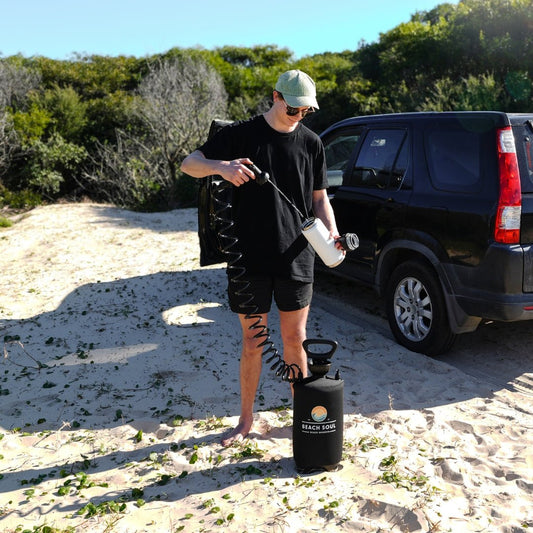
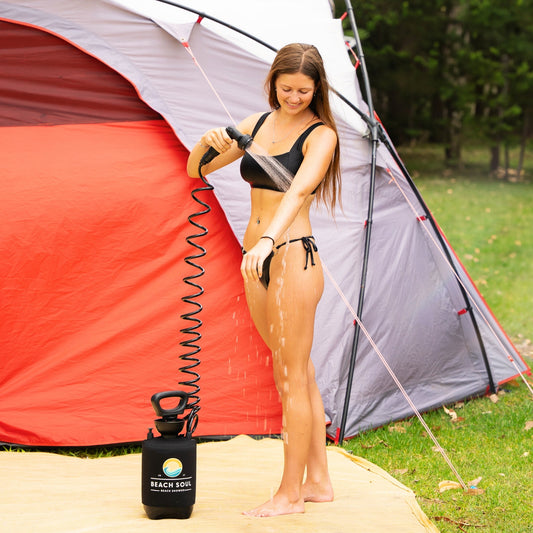
Rechargeable Camping Shower Pumps

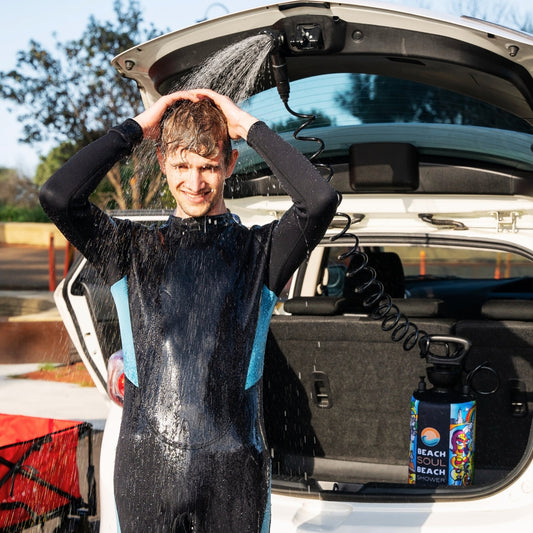
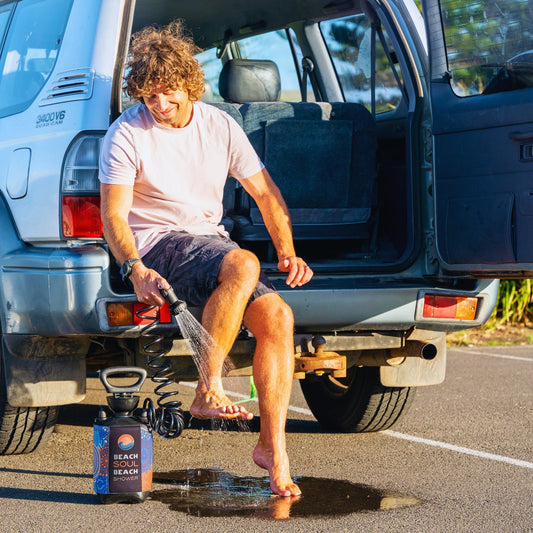
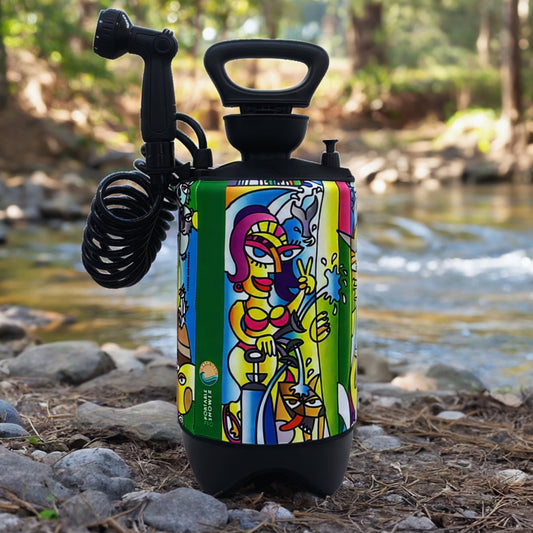
Rechargeable shower pumps are a flexible option when you want to draw water from a bucket, jerry can or other suitable container without connecting the shower to the vehicle. Battery capacity, runtime, charging method, flow settings, waterproof rating, hose length and display features vary by model.

Most rechargeable shower pumps in this style move water only — they do not heat it. If you want a warm shower, prepare water separately and keep it within the pump’s stated temperature limits. A temperature display on the pump or shower head does not mean the unit heats the water.

Solar Shower Bags

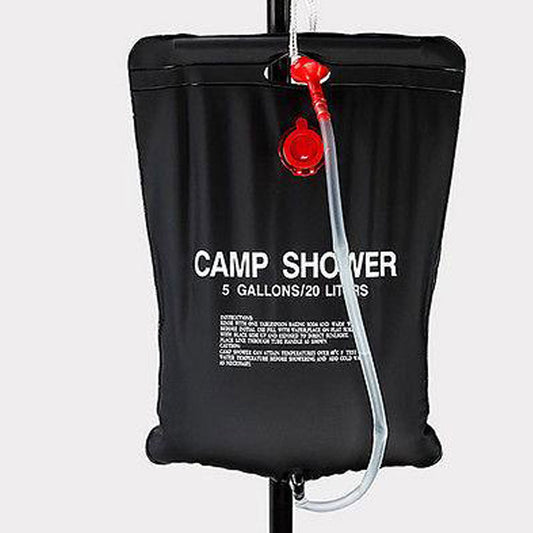
Solar shower bags use sunlight to warm stored water and need no electrical connection. They can be useful for simple camps where packed size and low complexity matter, but heating performance depends on sunlight, ambient temperature, wind, water volume and how the bag is positioned.

Check the bag capacity against both your water needs and the support you plan to hang it from. Water weighs about 1kg per litre, so a full 20L bag contains roughly 20kg of water and a 40L bag roughly 40kg before the bag and fittings are added. Always use a support capable of carrying the filled weight and follow the product’s hanging instructions.

Water can become hotter than expected in strong sun. Mix and test the water before use and check the temperature at the shower head rather than relying only on heating time or a built-in gauge.

12V Shower Pumps & Water Systems

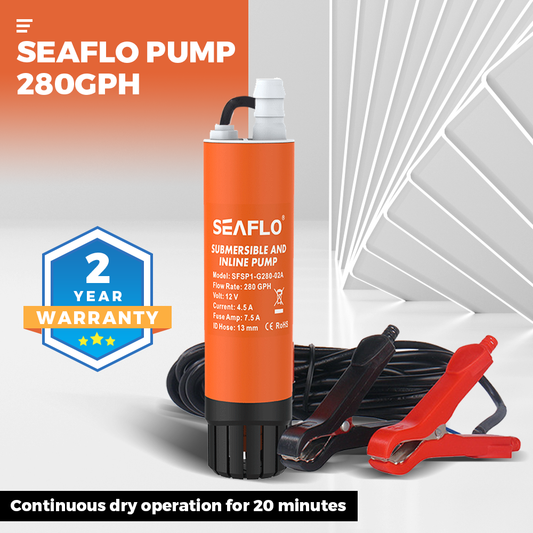
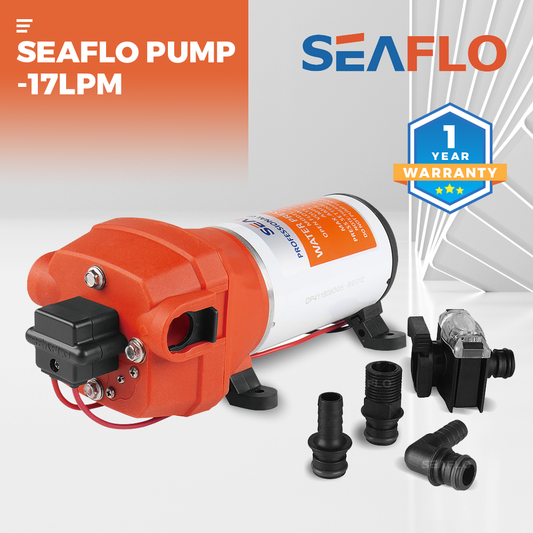
A 12V pump can suit a caravan, camper trailer, 4WD canopy or more permanent touring water system. These pumps are not interchangeable simply because they all use 12V power. Compare flow rate, pressure, current draw, self-priming capability, inlet and outlet size, hose compatibility and the manufacturer’s intended use.

Higher pressure or flow is not automatically better. The shower head, hose, fittings, water tank and plumbing all need to suit the pump. Use appropriately rated wiring and circuit protection for the pump’s current draw and follow the manufacturer’s electrical and installation instructions. For broader vehicle power equipment, browse 12V Camping Power.

Portable LPG Hot-Water Showers

Portable LPG hot-water systems are the main option in this range when you want the unit itself to heat water. Model requirements vary, but setup may include a compatible LPG bottle and regulator, a water source, sufficient water flow, ignition batteries and 12V power for a pump. Some packages include a pump or hose kit while others do not, so check the exact inclusions before ordering.

Flow rate, maximum water temperature, ignition method, gas connection and operating limits vary by model. Do not assume one set of specifications applies across the whole range.

The heater unit must be operated outdoors in a well-ventilated position that meets the manufacturer’s clearance and setup requirements. Never operate a portable LPG water heater inside a shower tent, enclosed annexe, caravan, vehicle, bathroom or other confined space.

Work Out Water Use Before Choosing Flow Rate

The amount of water a shower uses comes down to its flow rate and how long it runs. A stronger flow can feel more comfortable but can empty a limited water supply quickly. If you are carrying water rather than connecting to a mains supply, compare the stated litres-per-minute figure with the amount of water you can realistically bring, refill and dispose of.

An adjustable or trigger-style shower head can make it easier to stop the flow while soaping and restart it for rinsing. This can matter more on remote trips than chasing the highest available flow rate.

Check Hose Length, Connections & Mounting

Hose length affects where the water container, pump or heater can sit relative to the person showering. Also check the connection type, hose diameter, shower-head mount and whether adaptors are included. For 12V or LPG systems, confirm the water inlet and outlet requirements before building the rest of the setup around the appliance.

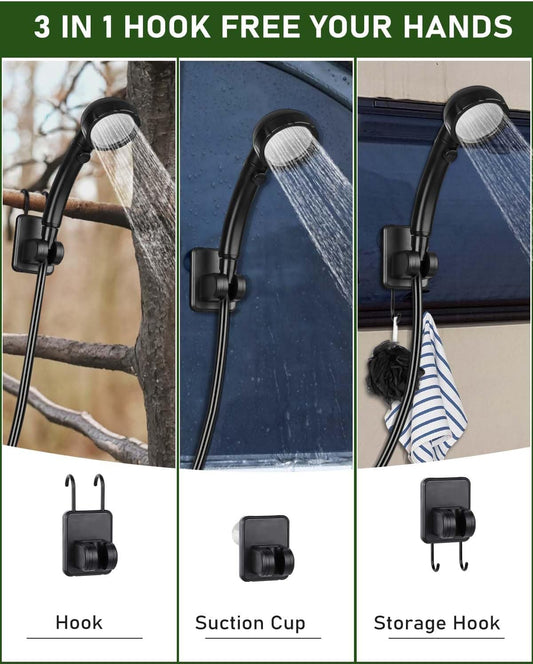
If the shower head needs to hang from a vehicle, tent pole or separate stand, make sure the mounting method is secure and does not put excessive strain on the hose or fittings.

Shower Bases, Greywater & Drainage

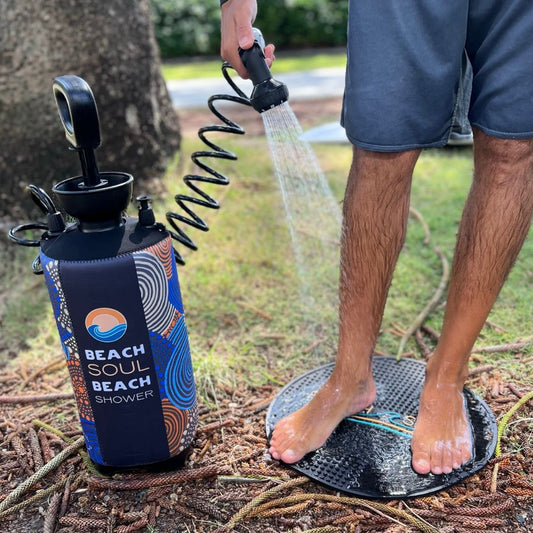
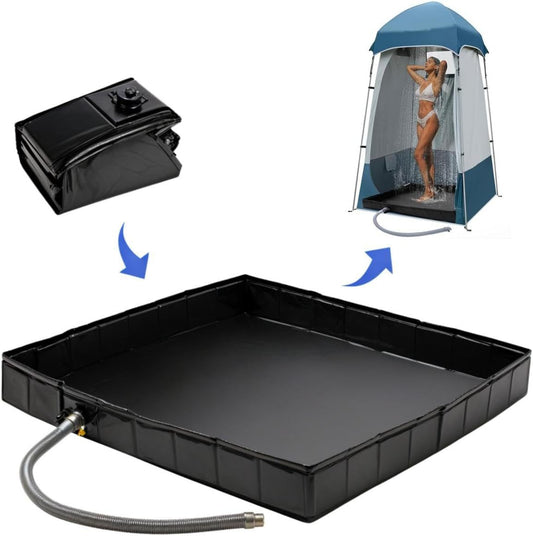
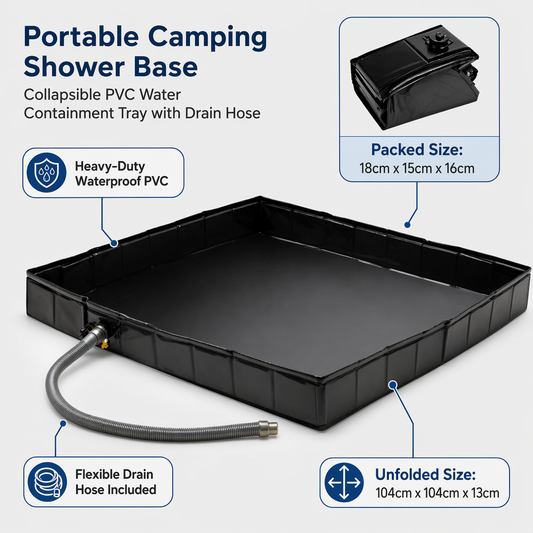
A collapsible shower base can help keep feet out of mud and contain runoff so it can be directed to a suitable collection or drainage point. It is useful where the campsite requires greywater capture, but having a base does not automatically make ground disposal acceptable.

Greywater rules vary between campsites, parks and local authorities. Keep soap and wastewater away from creeks, lakes, beaches and stormwater, even when soap is described as biodegradable. Check the official campsite rules before travelling, particularly in areas that require self-contained setups.

Power, Charging & Battery Runtime

Rechargeable models may use USB or USB-C charging, while 12V pumps need a suitable vehicle or auxiliary power connection. Battery runtime figures are model-specific and can vary with flow setting, battery condition and use. If you are relying on a rechargeable shower for several people, consider how and when you will recharge it between uses.

For a 12V pump, check its current draw and make sure the wiring, fuse or circuit breaker, connectors and power source are appropriately rated. Do not run a pump from an outlet that is not designed for the required load.

Using Warm or Hot Water Safely

Check water temperature before it reaches skin, especially when warming water separately for a rechargeable or 12V pump. Stay within the pump, hose and shower head’s stated temperature limits. With an LPG hot-water system, follow the manufacturer’s operating and shutdown instructions and do not alter gas fittings or safety devices.

If any gas connection appears damaged, leaks, or cannot be connected as instructed, stop using the appliance until it has been checked appropriately. Never use a flame to test for a gas leak.

Add Privacy Without Enclosing the Heater

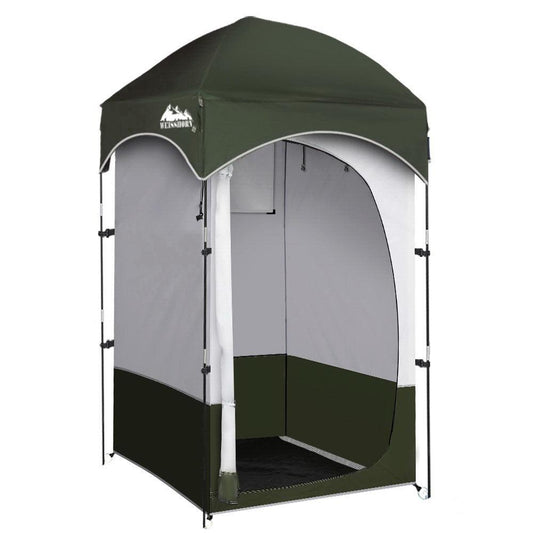
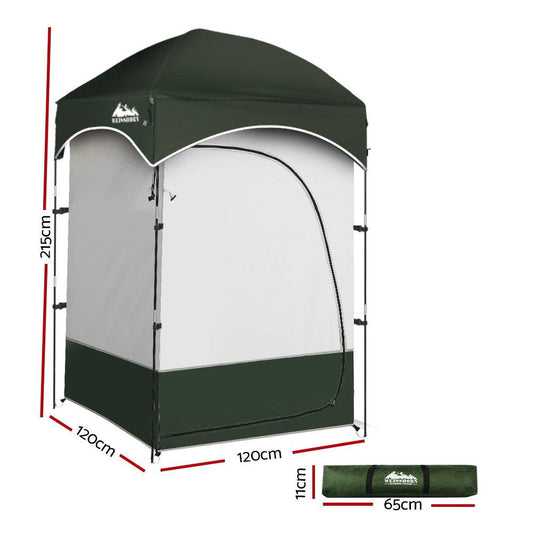
If you need a changing or shower enclosure, browse Shower & Toilet Tents. The privacy shelter is for the person showering; a portable LPG heater still needs to remain outside in the outdoor, ventilated position required by its manufacturer.

For a complete bathroom setup including portable toilets, return to Showers & Toilets or browse Camping Toilets.

Common Camping Shower Mistakes to Avoid

  • Assuming a rechargeable or 12V pump heats the water because it has a temperature display.
  • Choosing a high-flow shower without calculating how quickly it will use stored water.
  • Hanging a full solar shower bag from a branch, hook or frame that cannot safely support its filled weight.
  • Buying a 12V pump without checking pressure, current draw, hose size and connection compatibility.
  • Assuming every LPG hot-water package includes the same pump, regulator, batteries, hoses or fittings.
  • Operating a portable LPG water heater inside a shower tent, annexe, caravan or other enclosed area.
  • Letting greywater run into waterways, stormwater or an area where campsite rules require capture.
  • Waiting until a remote trip to test the complete shower setup for the first time.

Build the Rest of Your Camp Ensuite

Combine the shower that suits your water and power setup with a suitable Shower & Toilet Tent and Camping Toilet, or browse the wider Camping Gear range for the rest of your campsite setup.

Product note: Flow rates, pressures, battery capacities, runtimes, temperature limits, LPG requirements, fittings, inclusions and waterproof ratings vary by model. The current tag-based range can also include related outdoor washing and water-system accessories. Check the individual product specifications before ordering.

Safety note: Always follow the manufacturer’s instructions. Use portable LPG hot-water systems only in the outdoor locations and manner approved by their manufacturer, use appropriately rated electrical equipment for 12V pumps, and follow campsite or local rules for wastewater and drainage.

Guide reviewed: August 2026.

Frequently Asked Questions

Which type of camping shower is best for off-grid trips?

Choose by how you travel and how you will supply water and power. Rechargeable pump showers are portable and simple, 12V pumps suit more integrated vehicle or caravan setups, solar shower bags need no electrical power, and portable LPG hot-water systems suit travellers who want heated water and can meet the required outdoor setup conditions.

What is the difference between a rechargeable shower pump and a 12V shower pump?

A rechargeable shower pump has its own battery and is usually designed to draw water from a bucket or container. A 12V pump connects to a compatible 12V electrical system and may suit a more permanent caravan, camper or vehicle water setup. Check each model's voltage, current draw, pressure, flow rate and fittings.

How do I choose the right flow rate for a camping shower?

Balance comfort against the amount of water you can carry. A higher flow rate can feel stronger but uses stored water faster. Compare the product's stated litres-per-minute figure with your water capacity, and consider a trigger or adjustable shower head if you want more control over water use.

Can I pump warm water through a rechargeable camping shower?

Often yes, provided the water stays within the pump's stated temperature limit. Most rechargeable shower pumps move water rather than heat it, so the water is warmed separately. Check the individual product instructions before using warm or hot water, and always test the water temperature before showering.

How do I safely hang a solar shower bag?

Use a support that can safely carry the full weight of the filled bag and follow the product's hanging instructions. Water weighs about 1kg per litre, so a 20L bag contains roughly 20kg of water and a 40L bag roughly 40kg before the bag and fittings are added.

Can water in a solar shower bag get too hot?

Yes. Water temperature can vary significantly with sunlight, ambient temperature, water volume and how the bag is positioned. Check and mix the water before use, and test the temperature at the shower head rather than assuming it is safe because of the heating time or a temperature display.

What do I need to run a portable LPG camping hot-water system?

Requirements vary by model, but you may need a compatible LPG bottle and regulator, a suitable water supply, sufficient water flow, and 12V power for a pump where required. Ignition batteries, pumps, hoses or fittings may or may not be included. Check the individual product specifications and manufacturer instructions before use.

Where should I set up a portable LPG camping shower?

Set the LPG hot-water unit outdoors in a well-ventilated position that meets the manufacturer's clearance and operating requirements. Do not operate the heater inside a shower tent, enclosed annexe, caravan, vehicle or other confined space. The shower head can be positioned separately while the heater remains in its approved outdoor location.

Do I need a shower base when camping?

Not for every campsite, but a shower base can keep your feet out of mud and help contain runoff so it can be directed or collected appropriately. It does not automatically make ground disposal acceptable. Check the campsite or park rules for greywater capture and drainage before setting up.

How should I manage greywater from a camping shower?

Follow the rules of the campsite, park or local authority. Some locations require full greywater capture or an approved drainage point. Keep soap and wastewater away from creeks, lakes, beaches and stormwater, even when a soap product is described as biodegradable.

Popular at Just Camp

1 of 6

Camping Guides, Gear Reviews & Tips for Australia

VIEW ALL CAMPING TIPS