★★★★★

"Arrived earlier than quoted, Thank you Just Camp for the great service"

Ross

★★★★★

"Website was easy to navigate and I received my purchase promptly"

Brenda

★★★★★

"Purchased for a great price, service was excellent, postage very quick"

Lindy

★★★★★

"Great product and service A++"

Anthony

★★★★★

"My order arrived faster than expected and the quality was just as good as the big name brands"

Aaron

How to Choose 4WD & Powersports Audio for UTVs, ATVs & Touring

Choosing audio for a 4WD, UTV, ATV or golf cart is less about chasing the biggest wattage number and more about matching the system to the vehicle, mounting space, power supply and conditions it will face. The current range spans hardwired and battery-powered soundbars, amplified and passive tower speakers, powered subwoofers, mounting hardware, batteries and power accessories, with specifications that vary by model.

Start With the Vehicle and Mounting Location

Before comparing speakers, decide where the system can be mounted without blocking visibility, controls, passenger movement or safe access around the vehicle. Measure available width, bar or tube diameter, clearance to roofs and windscreens, and the space needed for wiring or battery removal. Off-road vibration also makes the strength of the mounting structure and hardware especially important.

Soundbars vs Tower Speakers

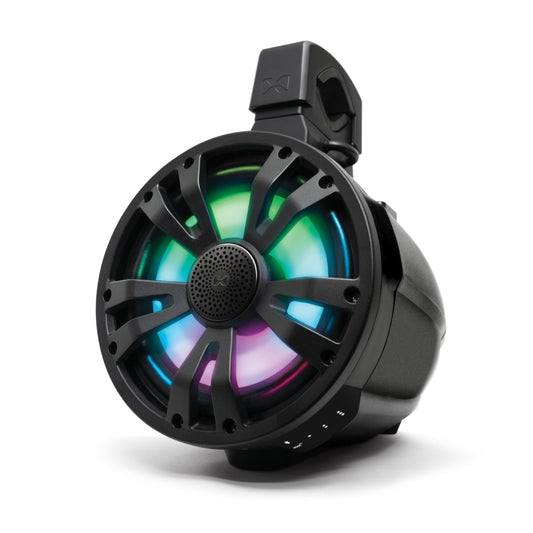
A powered soundbar packages multiple drivers, amplification and controls into one enclosure, making it a practical choice when you want a relatively simple installation. Tower speakers can be positioned separately and may suit roll bars, cages and custom layouts where you want more flexibility in placement. The better choice depends on the vehicle, the mounting points available and whether you want an all-in-one system or a more modular setup.

Battery-Powered vs Hardwired 12V Audio

Battery-powered soundbars and amplified speaker systems can reduce the need for permanent power wiring and may be easier to move between vehicles or campsite setups. Hardwired 12V models avoid having to recharge a separate battery and can suit vehicles where the audio system will stay installed. Battery capacity, charging options, current draw and included cables vary by model, so compare the exact power requirements before choosing.

Amplified vs Passive Tower Speakers

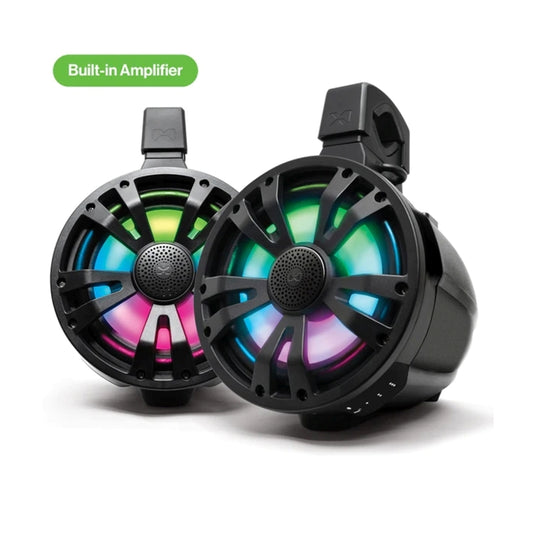
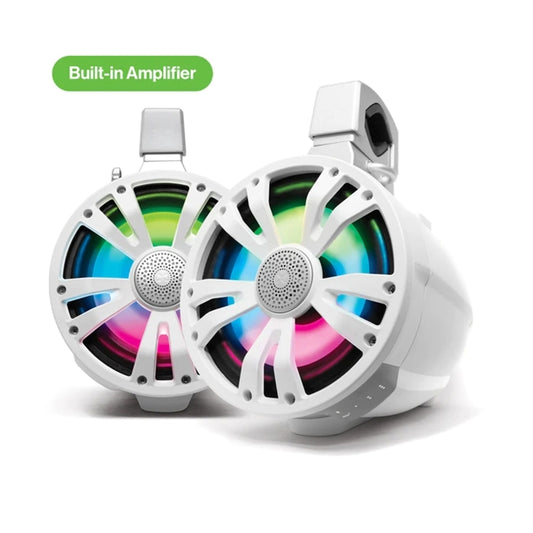
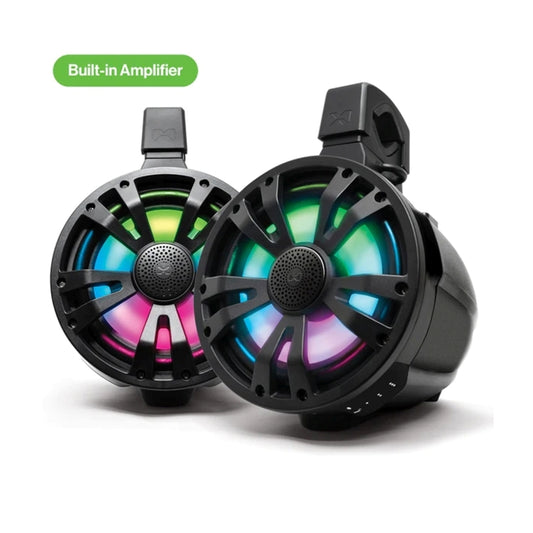
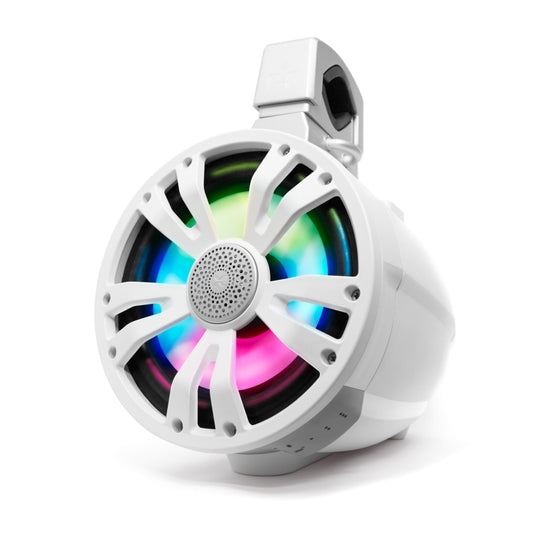
Amplified tower speakers include amplification within the system, while passive tower speakers need a compatible external amplifier. Some amplified pairs use one powered speaker and one companion speaker, while other systems provide amplification in both enclosures. Do not assume two similar-looking tower speaker kits have the same electrical requirements; check amplification, impedance, RMS power and connection details on the individual product.

Adding a Powered Subwoofer

A powered subwoofer can add low-frequency output that small soundbar or tower speaker drivers may not reproduce as strongly. It also adds a meaningful electrical load. For example, the current powered subwoofer range includes a 12V model with a 30A requirement, so its circuit should be planned as a high-current accessory rather than treated like a small plug-in device. Check mounting space, ventilation, signal compatibility, cable sizing and circuit protection for the exact model.

Understand RMS vs Peak Power

Peak wattage describes short-duration capability and is useful only when compared in context. RMS or continuous power gives a better indication of sustained output when matching passive speakers and amplifiers. Different products may advertise peak figures prominently, so compare like with like rather than assuming the largest number will automatically produce the best result in your vehicle.

IP66 vs IP67 for Outdoor Audio

Outdoor and powersports audio is designed for harsher environments than typical indoor equipment, but the ingress-protection rating still needs to be read correctly. IP66 covers dust-tight construction and resistance to powerful water jets, while IP67 includes a temporary-immersion test under specified conditions. These ratings apply to the tested product enclosure and do not automatically make every plug, cable joint, mounting hole or installation point suitable for immersion.

Bluetooth, EcoCast and Multi-Speaker Systems

Bluetooth provides direct audio streaming from a compatible phone or device, while selected systems add EcoCast for linking compatible EcoXgear products. Some models also include FM radio, app control, RGB lighting or LEDCast lighting synchronisation. Features vary by model, so check the product specifications if multi-speaker linking or lighting control is important to your setup.

Match Mounts to Bar Diameter and Structure

Tower speaker clamps and soundbar brackets are not one-size-fits-all. Compare the supported bar or tube diameter, bracket style, adjustment range, speaker weight and available clearance with your vehicle. Some tower systems in the current range support round bars from about 1.5 to 3 inches and allow rotation, while soundbar mounts use different bracket systems. Even a product described as universal still needs its dimensions checked against the actual vehicle.

Plan 12V Wiring and Circuit Protection

Hardwired audio should be treated as part of the vehicle's electrical system. Current demand varies substantially across the range: some soundbars are around 10A, while other models and powered subwoofers can require 25A or 30A. Use appropriately rated cable, connectors and circuit protection for the specific product, cable length and installation method, and follow the manufacturer's wiring instructions. Do not assume one fuse or cable size suits every system.

48V Golf Cart Systems and Step-Down Converters

Many powersports audio products are designed for 12V DC and should not be connected directly to a 48V golf cart supply. A compatible 48V-to-12V converter can provide the required voltage when it is correctly sized for the audio load and installed to the manufacturer's requirements. Check both the converter's supported equipment and the combined current demand if powering more than one audio component.

Batteries, Runtime and Charging

Quoted battery runtime depends on listening volume, lighting, connected-device charging, temperature and battery condition. Some battery-powered products in the current range quote up to around 20 hours under specified operating conditions, but that figure should not be treated as a guaranteed result for every trip. Check the individual model's battery capacity, charging method and stated test conditions, and recharge before longer outings.

RGB Lighting and Auxiliary Light Bars

Selected soundbars and tower speakers include RGB lighting, LEDCast synchronisation or rear-facing light bars. These can add useful campsite or recreational lighting, but they also consume power and may affect battery runtime. Lighting functions, colour control and app or remote compatibility vary by model, so check the exact feature set rather than assuming all products share the same controls.

Control Options and Remote Access

Depending on the model, control may be available through onboard buttons, Bluetooth, a smartphone app, RF remote or compatible multi-speaker functions. Replacement remotes and accessories are model-specific. Confirm the listed compatibility before ordering a remote, cable, battery, bracket or other accessory for an existing soundbar.

Vibration, Cable Routing and Periodic Checks

Off-road use subjects mounts, connectors and cables to repeated vibration. Route wiring away from sharp edges, heat, moving parts and pinch points, secure excess cable, and inspect mounting hardware and electrical connections periodically. Recheck clamps and brackets after initial use and whenever the vehicle has been driven over rough terrain.

Marine Use vs Off-Road Use

Many outdoor audio products can suit more than one environment, but a boat and an off-road vehicle create different mounting, electrical and exposure considerations. If you are fitting audio to a boat, browse Marine Audio & Speakers for the marine-focused range and compare the individual product's installation guidance.

Explore More 4WD Gear

For recovery equipment, vehicle accessories, touring gear and other off-road essentials, explore 4WD Gear & Off-Road Accessories.

Product Note

Power source, RMS and peak output, current draw, battery capacity, runtime, IP rating, Bluetooth version, EcoCast support, lighting, mounting hardware, bar diameter, included cables and accessory compatibility vary by model. Check the individual product specifications and installation requirements before ordering.

Safety Note

Follow the manufacturer's installation, electrical and mounting instructions. Use appropriately rated wiring and circuit protection for fixed 12V installations, keep audio equipment clear of vehicle controls and safe sight lines, and secure components for vibration and movement. Where fixed 240V wiring is involved, use an appropriately licensed electrician and follow local requirements.

Guide reviewed: August 2026.

Frequently Asked Questions

What is the best type of audio system for a UTV or ATV?

A powered soundbar is often the simplest all-in-one option, while tower speakers can provide more flexible placement and system expansion. Choose around the available mounting points, vehicle power supply, space, vibration and the volume you need. Check the individual product specifications and mounting requirements before ordering.

Should I choose a battery-powered or hardwired powersports soundbar?

Battery-powered soundbars can reduce permanent wiring and make the system easier to move between setups, while hardwired 12V models avoid having to recharge a separate battery. Runtime, current draw, charging options and included power hardware vary by model, so compare the exact specifications with how you plan to use the vehicle.

What is the difference between amplified and passive tower speakers?

Amplified tower speakers have amplification built into the system, while passive speakers require a compatible external amplifier. Some amplified pairs use one powered speaker with a companion speaker, while others have amplification in both speakers. Check the model's power, impedance and connection requirements before building the system.

What do IP66 and IP67 mean for powersports audio?

IP66 and IP67 describe tested protection for the product enclosure. IP66 covers dust-tight construction and resistance to powerful water jets, while IP67 includes a temporary-immersion test under specified conditions. The rating does not automatically apply to every cable, connector or installation point, so follow the manufacturer's fitting and exposure guidance.

Can I run a powersports soundbar from a 12V vehicle battery?

Yes, when the soundbar is designed for 12V DC and the vehicle electrical system can support its current demand. Current draw varies substantially between models, so use appropriately rated cable, circuit protection and connections for the specific product and cable run rather than assuming one wiring size suits every soundbar.

Do I need a separate amplifier for tower speakers?

Passive tower speakers require a compatible external amplifier. Amplified tower speakers have amplification built into the system and generally do not need a separate amp for the speakers they are designed to drive. Check whether the exact model is passive, amplified or part of an amplified-and-companion pair before choosing accessories.

How do I choose a mounting kit for a powersports soundbar or tower speaker?

Match the bracket or clamp to the product, tube or bar diameter, available clearance and the strength of the mounting structure. Also allow for speaker weight, adjustment range, vibration and safe access to vehicle controls. A mount described as universal still needs its dimensions and compatibility checked against your particular vehicle.

Can I add a subwoofer to a 4WD or UTV audio system?

Yes, if the subwoofer is compatible with the audio source and the electrical system can support it. Powered subwoofers can require considerably more current than a small accessory, so check the model's input requirements, wiring, fuse protection, mounting space and ventilation before installation.

Can 12V powersports audio be used on a 48V golf cart?

Not by connecting a 12V product directly to 48V. A suitable 48V-to-12V DC converter may be used when it is compatible with the equipment and sized for the required load. Check the converter's supported equipment, wiring and protection requirements before connecting the audio system.

How long do battery-powered powersports speakers and soundbars run?

Runtime depends on the model, battery capacity, volume, lighting, device charging, temperature and battery condition. Some EcoXgear battery-powered speakers and soundbars quote up to around 20 hours under specified listening conditions, so use the model's stated runtime as a guide rather than a guarantee.

Popular at Just Camp

1 of 6