Thunderstorm While Camping: What to Do
A thunderstorm at camp is not the time to tough it out under a tarp and hope it passes. In Australia, warm afternoons can turn into lightning, damaging wind and flash flooding quickly. If thunder is close enough to hear, treat it as a warning to move early rather than waiting for rain or a nearby strike.
A tent, swag, gazebo or open awning can be excellent shelter from ordinary weather, but none is a safe lightning shelter. Before a storm arrives, know where the nearest substantial enclosed building or fully enclosed hard-top vehicle is and keep the keys accessible.
Why a tent is not safe in a thunderstorm
Tent fabric does not protect you from lightning. Lightning can strike nearby ground, trees, poles, fences or equipment, then travel through the ground or conductive materials. Strong wind and falling branches add another risk, while heavy rain can turn low campsites and dry drainage lines into fast-moving water.
Do not shelter under an isolated tree, beside a power pole, in an open picnic shelter or beneath a caravan awning. Avoid exposed ridges, open water, metal fences and tall isolated objects.
What to do when thunder reaches camp
Move people first. Children and pets should be your priority; camp furniture and loose gear can wait if conditions are already dangerous.
The preferred shelter is a substantial enclosed building. If that is not available and it is safe to reach one, a fully enclosed hard-top vehicle is generally a much better option than a tent, gazebo or open shelter. Close the windows and stay inside until the storm has clearly moved away.
Do not cross open ground, climb onto a roof or try to hold down a lifting gazebo once lightning or severe gusts are already close. If safe shelter cannot be reached without exposing the group to a greater immediate danger, minimise exposure by moving away from isolated tall objects, water and metal while seeking the safest available protected location. There is no outdoor position that makes an active lightning storm safe.
A commonly used safety rule is to remain in shelter for at least 30 minutes after the last thunder before returning to camp activities.
Set up camp with storm weather in mind
Site choice matters before the weather turns. Avoid dead branches, dry creek beds, drainage lines, riverbanks and low hollows. Choose slightly raised, well-drained ground where possible and know how you would leave the site if access deteriorated.
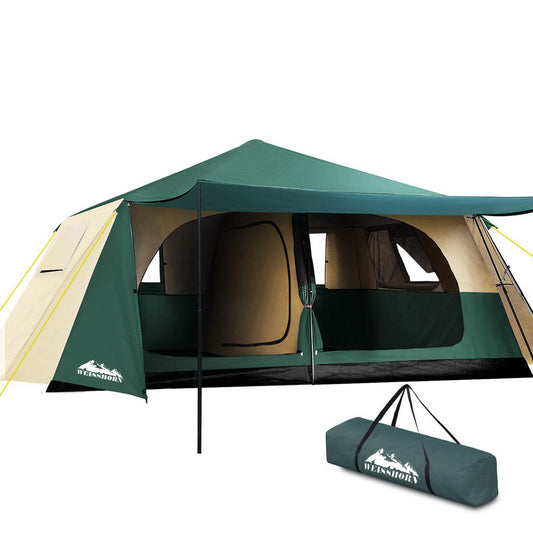
Pitch tents correctly with suitable pegs and guy lines, keep the fly clear of the inner tent and give tarps or awnings enough fall for rainwater to drain. If wind is building, retract caravan awnings and pack down lightweight gazebos early rather than adding more tie-down tension and hoping for the best.
For a broader pre-storm setup, see our guide on how to make a campsite storm ready.
Keep essential gear accessible
Before bad weather arrives, put torches, rain jackets, first-aid supplies, keys, charged phones and emergency contacts where everyone can reach them. Secure loose chairs, tables, fishing rods and tall poles before gusts arrive if it is safe to do so.
Keep outdoor electrical connections protected from rain and puddles. Do not handle damaged leads or electrical equipment while standing in water. Fuel-burning cookers and heaters should never be used inside tents, swags or enclosed fabric shelters.
After the storm
Once the waiting period has passed, inspect the site slowly. Check for fallen branches, unstable trees, damaged poles, loose guy lines and water movement before walking back under trees or around electrical equipment. Never touch fallen powerlines or fences that may be energised.
If anyone is struck by lightning, call Triple Zero (000) immediately. A lightning-strike victim does not retain an electrical charge, so first aid can be provided when it is safe for the rescuer to approach.
A storm does not have to end every trip, but the right decision is sometimes to leave. Weather warnings, rising water, dangerous access or repeated lightning are reasons to prioritise people over the campsite.