Portable Power Station Comparison for Camping
A portable power station can be brilliant for camping, but the biggest battery is not automatically the right one. Compare the energy you store, the output your appliances need and how quickly you can replace that energy each day.
Start with the devices you actually run
Check the wattage on every device or appliance you intend to use. Watt-hours describe stored energy; watts describe the rate an appliance draws power. High-draw cooking and heating appliances can empty portable batteries quickly even when the station can technically run them.
The four specs that matter
| Feature | What it tells you |
|---|---|
| Battery capacity (Wh) | How much energy the station stores |
| Continuous output (W) | What it can run continuously |
| Surge output (W) | Short starting load available for compatible appliances |
| Input/recharge rate | How quickly the battery can be replenished |
Capacity: allow a realistic buffer
Small stations suit phones, lights, cameras and other low-draw devices. Mid-size units can support more demanding camping setups. Large stations give more headroom for fridges, laptops and connectivity equipment, but they weigh more and need a realistic charging plan.
Do not assume all rated battery capacity will be available through AC outlets. Conversion losses and operating conditions reduce usable energy, so build a sensible margin into calculations rather than sizing the station exactly to theoretical consumption.
Output: capacity does not equal appliance power
A large-capacity battery with a low inverter rating still cannot run an appliance that exceeds its continuous output. Check both the continuous and surge requirements of the equipment you intend to connect.
A pure sine wave inverter is generally preferred for sensitive 240V electronics. Also check USB-C, USB-A and regulated 12V outputs so you are not unnecessarily converting everything through AC.
Charging matters off-grid
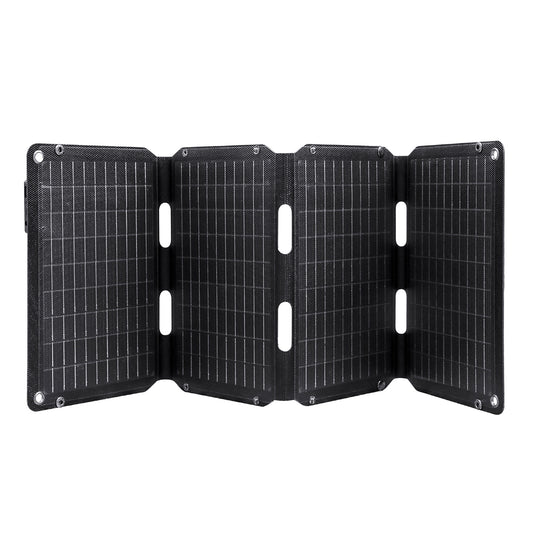
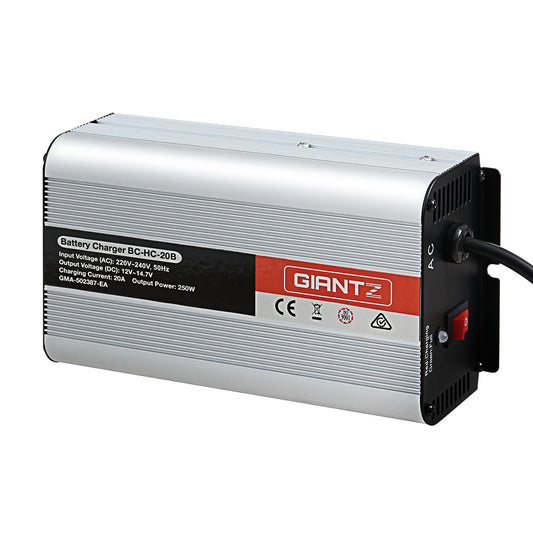
Mains charging is easiest before departure. Vehicle charging can help while driving, and solar becomes important on longer stationary stays. Check the station’s accepted solar voltage range and maximum solar input before pairing panels.
Solar output varies with weather, shade, temperature, orientation and cable losses. Size the charging plan around daily use rather than panel label wattage alone.
Battery chemistry and handling
LiFePO4 batteries are common in modern camping power stations because they offer a long cycle life and stable chemistry. Other lithium types can offer lower weight for similar capacity. Compare the manufacturer’s cycle-life specification and warranty rather than assuming every battery with the same chemistry performs identically.
Keep power stations shaded, dry and ventilated while operating or charging. Secure them properly in the vehicle and follow the manufacturer’s storage-charge guidance between trips.
Match the station to your camp style
A short powered-site trip may need little more than device charging. A fridge-based off-grid camp needs enough daily energy plus a way to replace it. Remote work, Starlink or medical devices require more careful calculation and redundancy.
Browse 12V camping power for the broader category, and see our 12V fridge guide if refrigeration is your main load.
Choose a station you can safely carry, recharge and operate without fuss. Those three factors matter more on a real campsite than one oversized headline number.