A Better Night’s Sleep Starts with the Complete Setup
A good night outdoors depends on more than the temperature printed on a sleeping bag. The best camp sleep setup combines a bag suited to the expected overnight conditions, enough insulation underneath you, a pillow that supports your normal sleep position and dry bedding that can be packed and stored properly.
Just Camp offers camping sleeping gear for family holidays, weekend camps, 4WD touring, caravanning, festivals, hiking and cold-weather trips across Australia. The range includes single, double and kids sleeping bags, compact and self-inflating camping pillows, camp quilts, wearable blankets and selected 12V heated travel blankets.
Before choosing, think about where you will sleep, the likely overnight temperature, whether you are travelling by vehicle or carrying your gear, and how much room you have to pack it.
Understanding Sleeping Bag Temperature Ratings
Sleeping bag temperature ratings should be treated as a guide, not a guarantee of comfort.
Some products list a broad temperature range, while others provide a comfort rating in addition to a lower or extreme rating. These figures are not interchangeable. A very low stated temperature does not necessarily mean an average person will sleep comfortably at that temperature.
How warm a sleeping bag feels can also be affected by:
- the insulation underneath you
- wind, humidity and condensation
- whether the bag fits closely or has excess empty space
- the clothing and base layers worn inside it
- age, body size, metabolism and personal sensitivity to cold
- whether the bag and filling are completely dry
Choose around the lowest conditions you realistically expect and allow a sensible safety margin. For colder trips, a properly insulated mattress and suitable clothing may make as much difference as moving to a heavier sleeping bag.
Check the individual product page for its supplier-stated temperature range, comfort information, filling weight and dimensions.
Single, Double and Kids Sleeping Bags
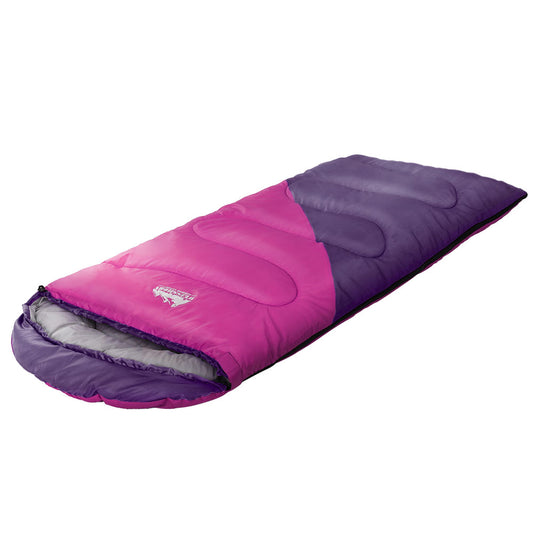
A single sleeping bag is generally the simplest option for solo camping, hiking, festivals and keeping in the vehicle for unexpected overnight stops. Some designs can be opened flat and used as a blanket when the weather is milder.
Double sleeping bags provide shared space for couples or family camping. Several options in the Just Camp range can separate into two individual bags, giving you more flexibility when sleeping arrangements change. Double bags are usually bulkier than comparable singles, so check both the open dimensions and packed size.
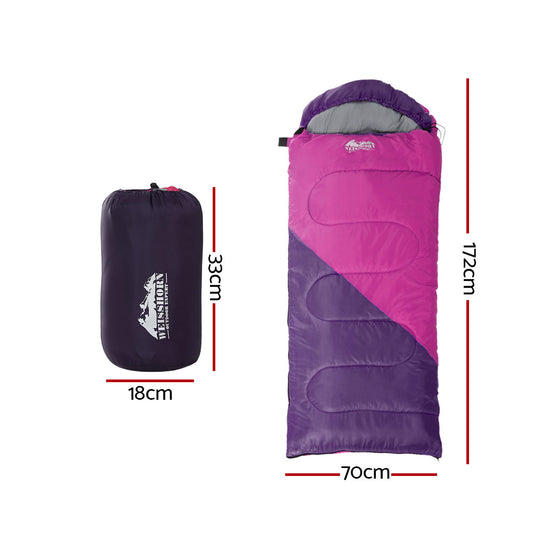
Kids sleeping bags are shorter and narrower than adult bags. A better-fitting bag reduces the unused space a child’s body needs to warm and is generally easier for them to carry and manage. Check the bag length against the child’s height rather than choosing by age alone.
Sleeping Bag Fill, Lining and Shape
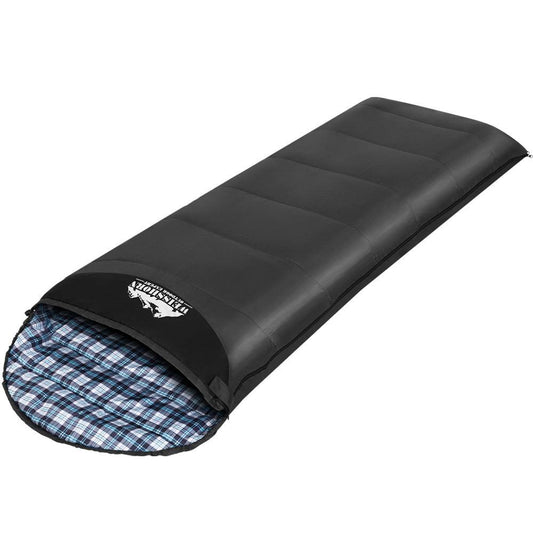
Many camping sleeping bags use synthetic hollow-fibre insulation because it provides practical warmth, dries more easily than natural down and is generally suited to family camping and vehicle-based travel.
A heavier fill can provide more insulation, but fill weight is not the only factor. Construction, loft, bag shape, fit and the way insulation is distributed all influence performance.
Common materials in the current range include polyester ripstop outer shells, polyester pongee linings, flannel-style linings and synthetic hollow-fibre fills. Water-resistant outer fabric can help with light moisture and tent condensation, but a sleeping bag should not be treated as waterproof shelter.
Envelope-style sleeping bags provide more room to move and can often open into a blanket. More closely fitted designs can reduce empty air space but may feel restrictive to sleepers who prefer more room.
Camping Pillows, Quilts and Blankets
A camping pillow can make a significant difference to sleep quality, particularly if you normally sleep on your side or require more neck support.
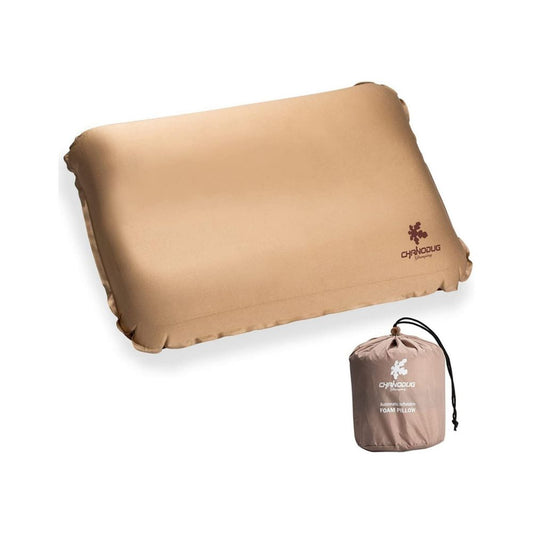
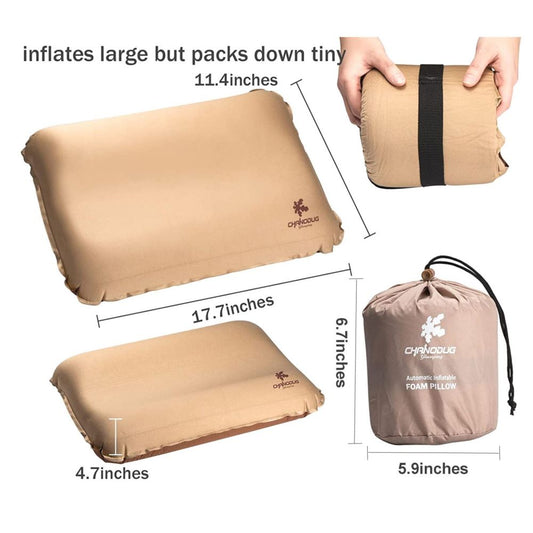
Inflatable pillows are typically light and compact. Self-inflating foam pillows provide more cushioning and can feel closer to a conventional pillow, although they usually take up more packed space. Check the inflated dimensions, packed dimensions and whether the firmness can be adjusted.
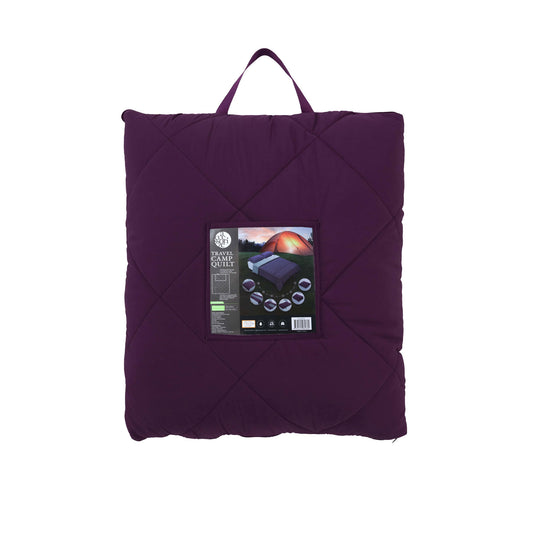
Camp quilts and wearable blankets can add another layer around the campsite, in a caravan or over an existing sleep system. They are also useful for outdoor events, roadside stops and cool mornings when you are not inside a sleeping bag.
Selected 12V heated blankets can provide powered warmth in compatible cars, caravans and camping setups. They should be used only with the specified power source and according to the supplied safety instructions. A heated blanket is an added comfort layer—not a substitute for weather-appropriate bedding, shelter or emergency preparation.
Just Camp Tip: Insulate Yourself from the Ground
A sleeping bag mainly insulates around and above you. The filling compressed beneath your body provides much less insulation than the lofted filling around it.
That means a warm sleeping bag placed on a poorly insulated mattress can still feel cold. In many conditions, improving the insulation underneath you can produce a bigger comfort improvement than simply choosing a thicker bag.
Pair your sleeping bag with a suitable camping mattress or insulated sleeping surface, and avoid allowing cold air to circulate freely beneath your bed.
Choose for the Way You Actually Travel
Vehicle-based campers can usually carry larger bags, thicker pillows and extra blankets without worrying as much about packed weight. Hikers and travellers with limited storage need to compare packed dimensions and weight more carefully.
Before purchasing, check:
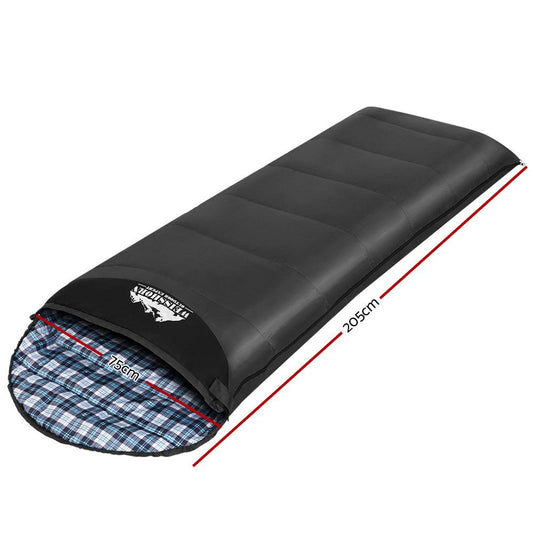
- open length and width
- packed size
- total weight
- stated temperature and comfort information
- filling type and weight
- whether a carry bag is included
- whether the bag opens flat or separates
- whether it suits an adult, child, single sleeper or couple
- the available space in your tent, swag, caravan or vehicle
It is worth testing new sleeping gear at home before relying on it for a cold or remote trip. Make sure the dimensions suit you, the zips operate easily and you know how tightly the product can realistically be repacked.
Common Sleeping Gear Mistakes to Avoid
- Treating an extreme or lower-limit temperature as a guaranteed comfort rating.
- Choosing a sleeping bag without considering the mattress or insulation beneath it.
- Assuming every adult bag will fit a child effectively.
- Looking only at the open dimensions and ignoring packed size and weight.
- Using a mild-weather bag for winter or elevated conditions.
- Packing a sleeping bag while it is damp and leaving it compressed in storage.
- Assuming water-resistant fabric makes a sleeping bag waterproof.
- Using a 12V heated blanket from an incompatible outlet or without following its safety instructions.
- Waiting until the first night of the trip to test unfamiliar sleeping gear.
Complete Your Camping Sleep Setup
Pair your sleeping bag, pillow or blanket with equipment from our Camping Mattresses, Tents & Swags, Camp Matting and Winter Camping Essentials collections, or explore the complete Camping Gear range.
Temperature note: Product temperature ranges and comfort figures are supplied by the relevant manufacturer or supplier and can use different testing or rating methods. Personal comfort is influenced by the complete sleep system, weather, clothing, shelter and individual factors. Review the individual product specifications before relying on any sleeping bag for cold conditions.
Guide reviewed: July 2026.