Butane Cooker vs LPG Stove for Camping
The gas stove vs butane question can be confusing because butane is a gas, while “gas stove” can mean a few different things. For most Aussie campers, the real choice is between a portable butane cassette cooker and an LPG camping stove that runs from a disposable screw-in canister or refillable bottle. Both will boil the billy and fry a decent brekky. The better option comes down to where you camp, how many mouths you are feeding and how much cooking you plan to do.
A compact butane cooker is hard to beat for simple weekend trips. An LPG stove with a larger bottle is often the smarter call for longer stays, family camps and caravans. Get the fuel system right and camp cooking becomes easy instead of a daily juggling act.
Gas stove vs butane: know what you are comparing
A portable butane stove normally uses a long, aerosol-style butane cartridge that clicks into a compartment on the side of the cooker. These single-burner units are popular for their low upfront price, flat pack-down size and simple operation. They are a practical choice for picnics, fishing trips, short breaks and camp kitchens where you only need one pan at a time.
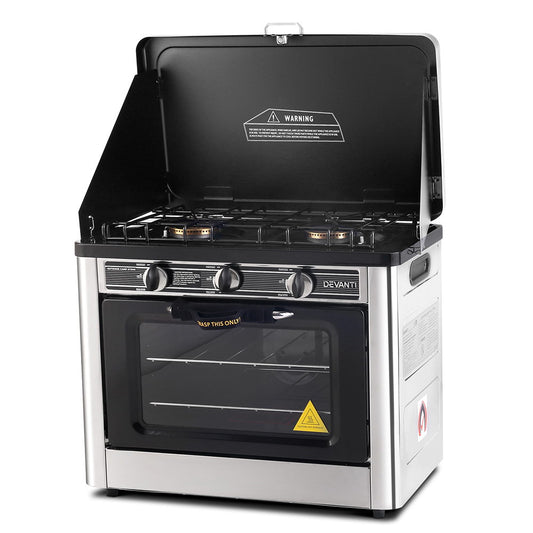
LPG camping stoves commonly connect to either small threaded gas canisters or a refillable LPG bottle via a hose and regulator. LPG is usually a propane and butane blend, although the mix varies. These setups range from compact two-burner fold-out stoves to larger cookers built for caravan annexes and extended touring.
So, this is not strictly gas stove versus butane. It is a comparison of fuel formats and stove styles. The useful question is: do you want the convenience of self-contained butane cartridges, or the capacity and flexibility of an LPG setup?
Choose butane when quick and compact matters most
Butane cookers suit campers who want to pull up, cook and pack away with minimal fuss. There is no separate hose, regulator or bulky gas bottle to manage. Slide in a cartridge, lock it in and you are ready for a quick feed.
That makes them especially handy for solo travellers, couples, day trips and anyone building a first camp kit on a sensible budget. A butane cooker also works well as a second burner beside a barbecue or main camp stove when the family is hungry and dinner needs to happen faster.
The cartridges are generally easy to find at camping stores, hardware shops and many supermarkets. Their slim shape is convenient to store in a camp box, and swapping an empty cartridge is quick. For occasional use, this can be easier than owning and refilling a gas bottle.
There are trade-offs. A single butane burner limits how much you can cook at once, and cartridges do not hold as much fuel as a refillable LPG bottle. If you are making coffee, cooking eggs and boiling water for noodles at the same time, one burner soon feels restrictive. Multiple cartridges also create more waste over a long trip, so they need to be disposed of responsibly when completely empty.
Choose LPG for longer trips and bigger camp meals
If camp cooking is more than heating baked beans, an LPG stove is usually the more capable option. A two-burner model lets you boil pasta while cooking a sauce, or run a frypan beside the kettle. That is a big win for families, groups and anyone spending several nights in one spot.
A refillable LPG bottle carries far more fuel than a butane cartridge and is more economical over repeated use. For a caravan holiday, a week at the beach or a long 4WD lap, it is easier to keep one correctly sized bottle topped up than carry a stack of cartridges. LPG bottles can also run compatible camp ovens, barbecues and some hot-water gear, which helps simplify your setup.
Small threaded canisters sit between the two options. They are compact enough for tent camping and often suit lightweight hiking-style stoves, but they cost more per cook than bulk LPG. They are a good fit when storage space is tight and you want more stove choices than a cassette cooker provides.
The downside of LPG bottle setups is extra gear. You need a suitable hose and regulator where required, a stable spot for the bottle and enough room in the ute, wagon or caravan storage area. It takes a few extra minutes to set up, but that effort pays off once you are cooking proper meals every day.
Cold weather can change the answer
Butane does not vaporise as readily in cold conditions as propane-rich LPG mixes. On a chilly alpine morning or a frosty inland winter camp, a butane cooker can lose power and take longer to boil water. It may still work, but performance can be noticeably less impressive.
For coastal summer camping, most butane users will never find this a major issue. For winter touring, high-country trips or early starts in cold weather, choose an LPG stove and fuel that are designed for those conditions. Check the manufacturer’s instructions for the exact stove and approved canister or bottle type.
Wind matters too. Neither fuel type enjoys a breeze stealing heat from the burner. Position your cooker in a sheltered, well-ventilated area and use a purpose-made windscreen only if the stove manufacturer permits it. A windscreen that traps too much heat around a butane cartridge can be dangerous.
Cost, storage and running time
The cheapest setup to buy is often a single-burner butane cooker. That is why it remains a favourite for casual campers and emergency cooking at home. However, the cheapest option at the checkout is not always the cheapest over a full season of trips.
For frequent campers, refillable LPG bottles usually offer better value per meal. The bottle costs more upfront, and you will need the right fittings, but refilling is generally more cost-effective than replacing individual cartridges. It also means fewer stops hunting for fuel when you are away from larger towns.
Storage is where butane wins. A cooker and a handful of cartridges can fit neatly into a crate. An LPG bottle needs to be transported upright and secured so it cannot fall or roll around. Never leave gas cylinders or cartridges in a hot, enclosed vehicle for longer than necessary, and keep them away from direct sunlight and ignition sources.
Running time varies widely with burner output, flame setting, wind and what you are cooking. A kettle brought to the boil uses far less fuel than an hour of simmering a stew. Rather than relying on one advertised runtime, pack a fuel buffer. For a weekend with a butane cooker, taking a couple of spare cartridges is sensible. For a longer LPG trip, start with a filled bottle and consider your other gas appliances before you leave.
Safe camp cooking is non-negotiable
Both butane and LPG are safe when the appliance is in good condition and used as directed. Both are also highly flammable. Use every cooker outdoors in fresh air, on a flat and stable surface, clear of grass, tent walls, awnings, paper towel and other flammable gear.
Never cook inside a tent, swag, camper, caravan or enclosed annex. The fire risk is obvious, but gas appliances can also produce dangerous carbon monoxide when ventilation is poor. A doorway or open window is not the same as cooking outside.
Before lighting an LPG stove, inspect the hose, connections and regulator for cracks, damage or loose fittings. If you smell gas, turn off the supply if it is safe to do so, move away from ignition sources and do not light the stove. Do not use makeshift adapters, refill disposable cartridges or modify a stove to take fuel it was not designed for.
With butane cassette stoves, use only the cartridge type specified by the manufacturer and fit cookware that does not overhang the cartridge compartment. Oversized pots can reflect heat onto the canister, causing it to overheat. That is a simple detail with serious consequences.
Which camp cooker should you buy?
Choose a portable butane cooker if you want an affordable, compact option for quick meals, weekends away and occasional use. It is fast to set up, easy to store and ideal when one burner is enough.
Choose a two-burner LPG stove and refillable bottle if you camp regularly, cook for a family, travel in colder conditions or want the freedom to make bigger meals. It takes more space, but it gives you more cooking capacity and better long-term value.
Plenty of experienced campers carry both. A main LPG stove handles dinner, while a butane cooker makes a handy backup burner for coffee, bacon or a roadside lunch. Build your camp kitchen around the way you actually travel, then browse our camp cooking gear for the rest of the setup. Our camp cooking accessories guide is also useful if you’re building a kitchen from scratch. Pack enough fuel to enjoy the view without cutting dinner short.