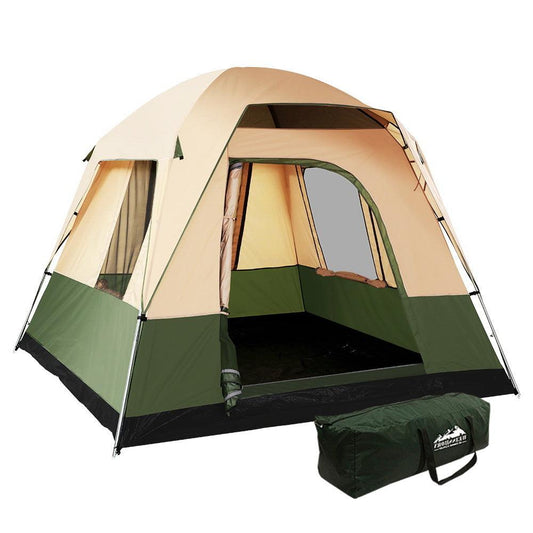
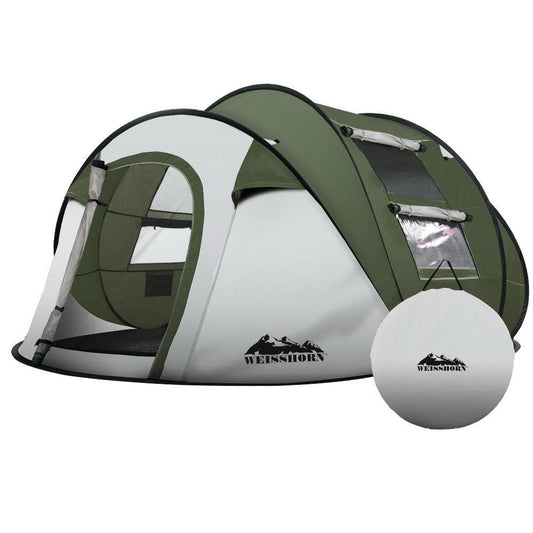
What Size Tent for Family Camping Trips?
Share
You feel it on the first night when the tent is wrong. If it is too small, everyone is on top of each other, bags end up under feet, and getting changed becomes a circus. If it is too big, you are hauling extra bulk, taking up more campsite space, and often paying for room you do not really use. If you are asking what size tent for family camping, the short answer is this - go bigger than the number on the label.
That is because tent capacity ratings are usually based on people lying shoulder to shoulder, with very little spare room for gear, bedding or the general mess that comes with camping with kids. For most Australian family trips, comfort matters just as much as sleeping spots. A tent that technically sleeps four may not feel like a good family tent once you add stretchers, sleeping bags, backpacks, wet towels and a couple of pairs of muddy shoes.
What size tent for family use really means
When brands say a tent is a 4-person, 6-person or 8-person model, they are talking about maximum sleeping capacity, not comfortable living. That is a handy starting point, but it is not the number most families should shop by.
A better rule is to size up by at least two people from your actual group size. For a family of four, a 6-person tent is often the sweet spot. For a family of five, an 8-person tent usually makes more sense. That extra room gives you space for gear, room to move, and a much better chance of staying organised when the weather turns or the kids need an early night.
If you camp with little ones, the temptation is to think smaller is fine because kids do not take up much space. In reality, family camping gear takes up plenty. Portacots, extra blankets, toys, snacks, spare clothes and camp chairs all add up. Young kids also mean more time inside the tent, especially in rain, wind or early mornings. A bit of extra floor space goes a long way.
A practical tent size guide by family size
For couples with one child, a 4-person tent can work for short trips if you pack light and keep most gear in the car. If you want more comfort or plan longer stays, a 6-person tent will feel much easier to live with.
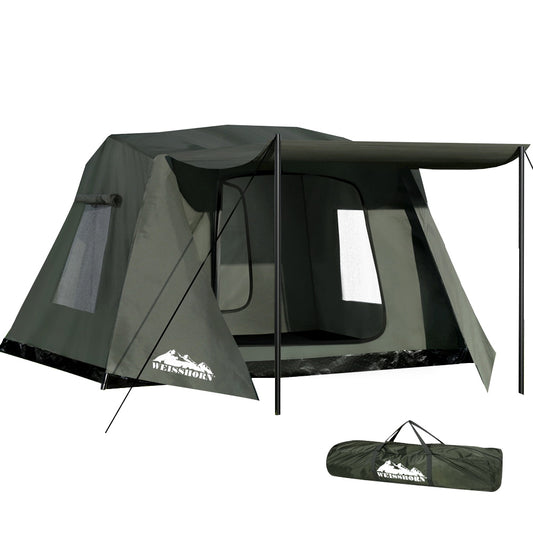
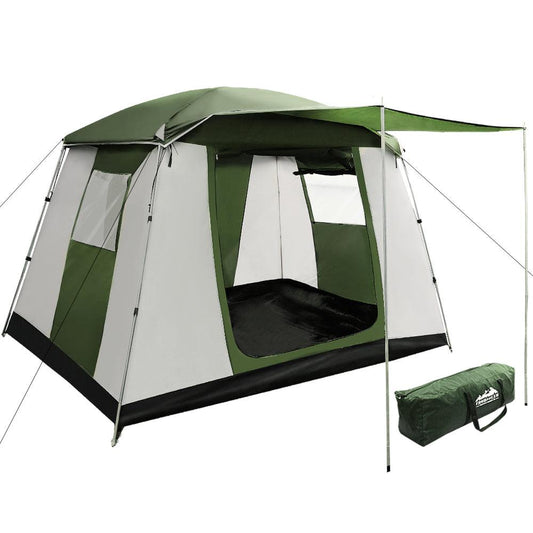
For families of four, a 6-person tent is the usual safe pick. You get enough sleeping room without stepping into the sort of footprint that can be awkward on smaller campsites. A 4-person tent may still work for overnight trips or festivals, but it can feel tight pretty quickly.
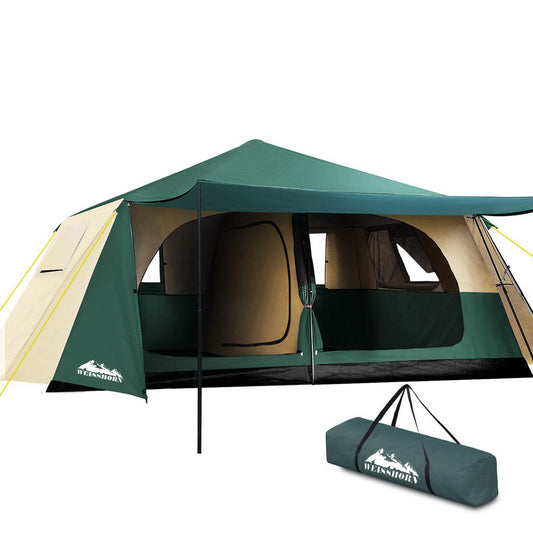
For families of five or six, an 8-person tent is usually the practical choice. This size gives you room for bedding, a central walkway, and some separation between sleeping zones. It is especially useful if you have older kids who want a bit more personal space.
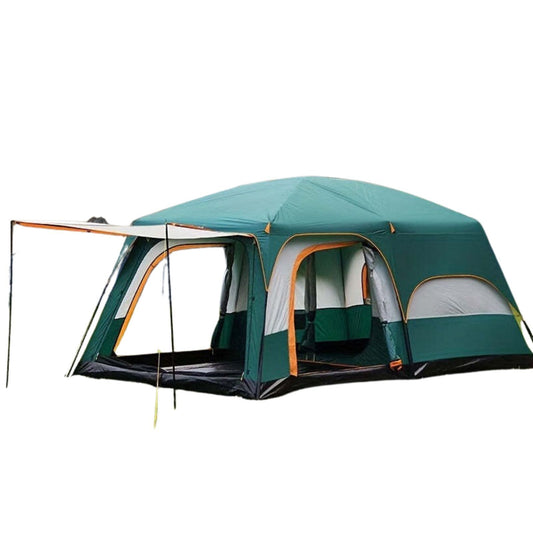
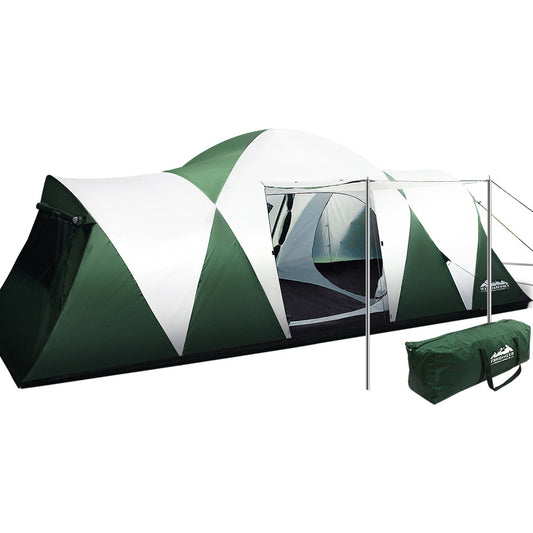
For bigger families, or if you are camping with grandparents or another adult, a 10 to 12-person tent may be worth a look. At that point, layout becomes just as important as size. Multiple rooms, dividers and separate entry points can make a big difference to comfort.
Floor space matters more than the label
If you really want to get the sizing right, look beyond the person rating and check the actual floor dimensions. A big number on the box does not always mean a roomy design.
Think about how you sleep. A family using sleeping mats can fit into a smaller footprint than a family using stretchers or double air mattresses. If you plan to stand up camp beds inside the tent, make sure the length and width allow for them with enough room left to walk around. Many families buy a tent based on the rated capacity, then realise their bedding setup barely fits.
Centre height is another big one. Being able to stand up while getting changed or sorting gear is not a luxury when you are camping with kids. It saves time, reduces clutter and makes the whole trip feel less cramped. For a proper family tent, strong headroom is usually worth paying for.
Think about your gear, not just your people
One of the biggest sizing mistakes is forgetting where everything else goes. Even if you cook, eat and relax outside, the tent still ends up holding a lot of gear. Clothes bags, torches, chargers, shoes, towels and food tubs all need a spot.
If you are touring in a 4WD and can leave some gear in the vehicle, you might get away with a smaller tent. If you are setting up at a holiday park for a week and bringing half the house with you, you will want more room. Families heading to the coast often need extra space for wet gear, towels and sandy shoes. Bush campers may want room for jackets, boots and emergency supplies inside overnight.
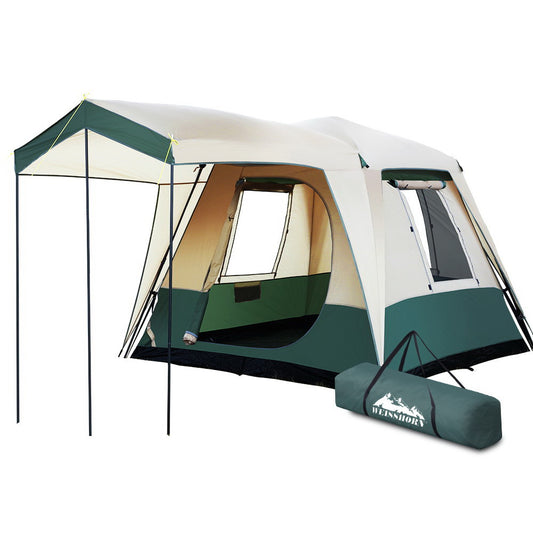
A front awning or enclosed vestibule can help here. It is not the same as internal floor space, but it is handy for storing boots, eskies and bags out of the weather. If you are choosing between two tent sizes, a smart layout with covered storage can sometimes beat a bigger but less practical design.
What size tent for family camping in Australian conditions?
Aussie camping adds a few extra things to think about. Heat, wind, sudden rain and red dirt all make tent comfort more important. A small tent can get stuffy fast in warm weather, especially if you are all zipped up early with tired kids. More space and decent ventilation make a real difference on summer trips.
That said, bigger is not always better. Larger tents can be heavier, slower to set up and harder to keep stable in strong wind if the design is not up to it. If you move campsites often, a giant family tent may become more hassle than help. For weekenders doing quick setup and pack-down, a well-designed 6-person or 8-person tent often hits the sweet spot.
If you mostly camp in exposed coastal spots or breezy inland areas, pay attention to the shape and construction as much as size. A slightly smaller tent with better weather handling may suit you better than a massive tent that feels flappy and awkward when the wind picks up.
Room layouts can make or break a family tent
Not all large tents feel large in use. Some have one open sleeping area, while others have divider walls or separate rooms. The best layout depends on your family.
For parents with younger kids, one main room is often easiest. You can keep everyone close, check on the kids without fuss, and make bedtime simpler. For families with older children, separate sleeping zones are usually worth it. Even a basic divider can help with privacy, early bedtimes and general peace.
You should also think about door placement. A tent with only one entry can become annoying if someone needs to get out during the night. Multiple doors improve airflow too, which is handy in warmer parts of Australia.
When it is worth sizing up
If your trips are more than a night or two, size up. If the forecast looks wet, size up. If you have toddlers, size up. If you are using air beds or camp stretchers, definitely size up.
Extra room is not just about comfort. It also helps keep the tent tidy, which makes the trip feel easier from the first afternoon to the final pack-up. That matters when camping is meant to be a break, not a test of patience.
Where people get caught out is buying for the smallest possible scenario. Maybe the family can squeeze into a 4-person tent for one quick trip, but if most weekends away involve gear, snacks, toys and changing weather, the tent will feel undersized fast.
When a smaller tent still makes sense
There are times when going smaller is the right call. If you are doing quick overnight stops, touring light, or need something easier to pack in the boot, a more compact family tent can be a smart buy. It is also worth considering if your kids are very young and you mostly use the tent just for sleeping.
Some families solve the size question by using a main tent plus a second small tent once the kids are older. That can be easier to transport than one massive tent, and it gives everyone more flexibility at camp.
The right answer depends on how you camp, how long you stay, and how much comfort matters to your crew.
If you want a simple rule to shop by, match your family size, then add two. It is the easiest way to avoid a cramped setup and get a tent that feels practical in the real world, not just on the packaging. A family of four should start at a 6-person tent, a family of five should look hard at an 8-person tent, and bigger groups should pay close attention to layout as much as overall capacity. Get that call right, and every trip feels easier before you even unroll the swag, chair or sleeping bag.