

Best Family Camping Tents for Aussie Trips
Share
A family tent can make or break the whole trip. If setup turns into an argument, everyone starts hot, tired and over it before the camp chairs are even out. That’s why choosing the best family camping tents comes down to more than sleeping capacity - you need the right mix of space, weather protection, packability and ease of use for the way your family actually camps.
What makes the best family camping tents?
For most Australian families, the best tent is not the biggest one on the shelf. It’s the one that suits your crew, your vehicle, your campsite style and the sort of weather you’re likely to face. A tent that feels roomy at home can be a pain if it takes half an hour to pitch in a coastal breeze or fills the whole boot before you’ve packed sleeping bags, camp kitchen gear and the kids’ bikes.
The sweet spot is usually a tent with enough room for everyone to sleep comfortably, plus enough head height and floor space to handle wet shoes, day bags and the usual family camping clutter. If you’ve got two adults and two kids, a six-person tent often feels more realistic than a four-person tent. Capacity ratings are generally based on mats laid side by side with very little spare room.
It also pays to think about how often you camp. If it’s one or two holiday trips a year, a value-focused family tent with straightforward features may be the smart buy. If you’re away regularly, especially across different seasons, spending more for better ventilation, stronger poles and a more weather-ready fly can save plenty of hassle later.
Best family camping tents by type
Not every family tent is built for the same job. The right style depends on whether you want quick overnight convenience, extra comfort for longer stays or something that handles varied conditions around Australia.
Dome tents for easy weekends
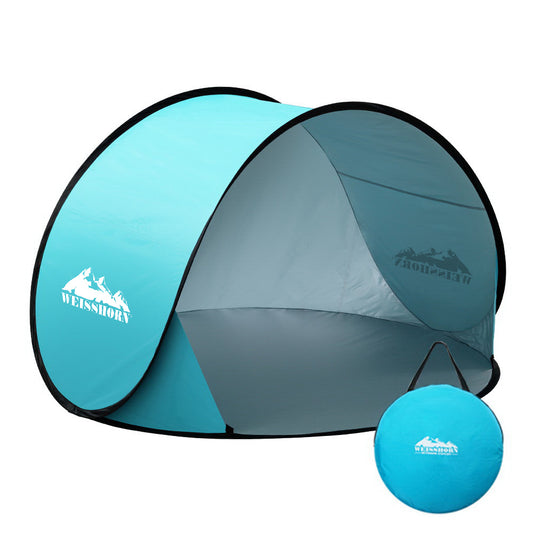
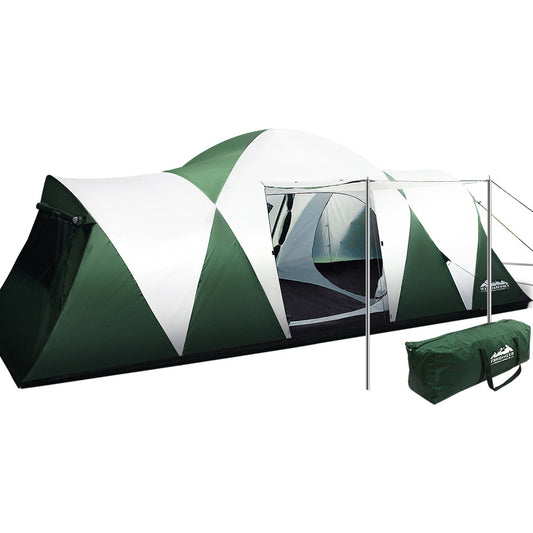
Dome tents are popular for good reason. They’re usually affordable, simple to carry and easier to pitch than more elaborate designs. For smaller families or shorter weekend trips, a larger dome tent can be a practical all-rounder.
The trade-off is usable space. Dome tents can narrow at the edges, so while the listed capacity may look generous, the actual liveability can feel tighter once everyone’s gear is inside. They’re a solid option if you want value and simplicity, but they’re not always the best pick for longer family stays.
Cabin tents for comfort and headroom
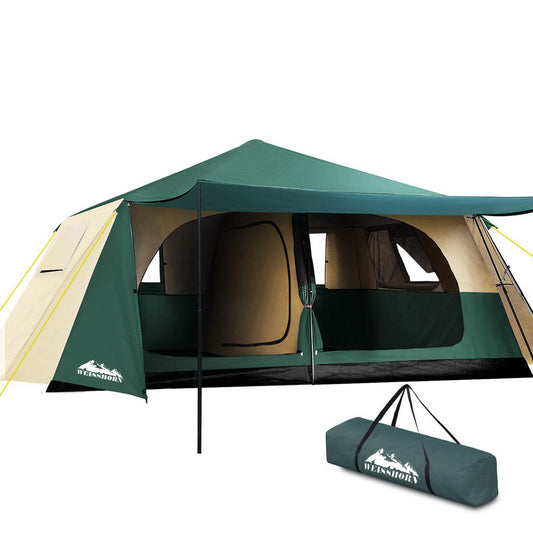
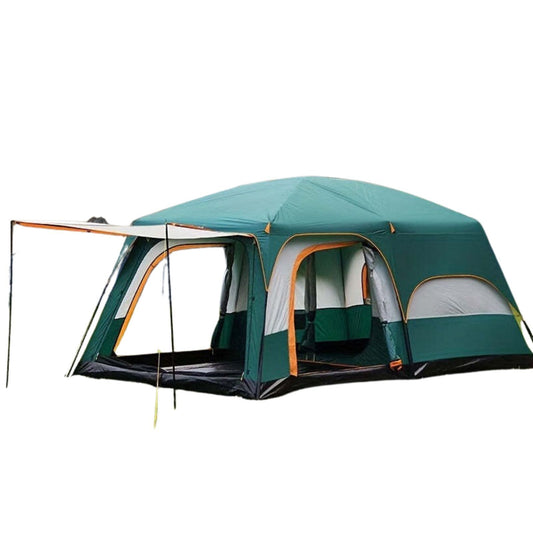
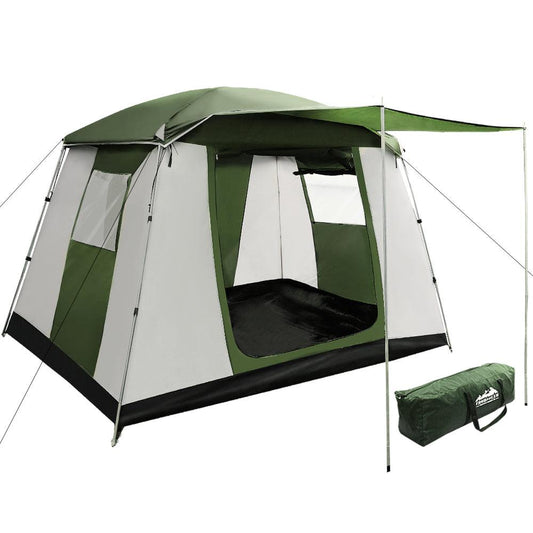
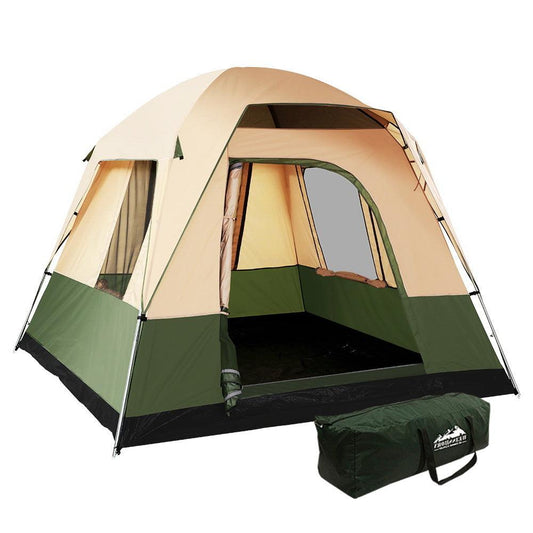
Cabin-style tents are often closer to what families picture when they think of comfort camping. They tend to have near-vertical walls, which makes a big difference when you’re changing clothes, organising gear or getting little kids sorted for bed.
This style usually gives you more usable floor area and better standing room. That makes cabin tents one of the best family camping tents for school holiday trips or longer stays at powered sites and holiday parks. The catch is that larger cabin tents can be bulkier to transport and may take a bit more care to set up properly.
Instant up tents for faster setup
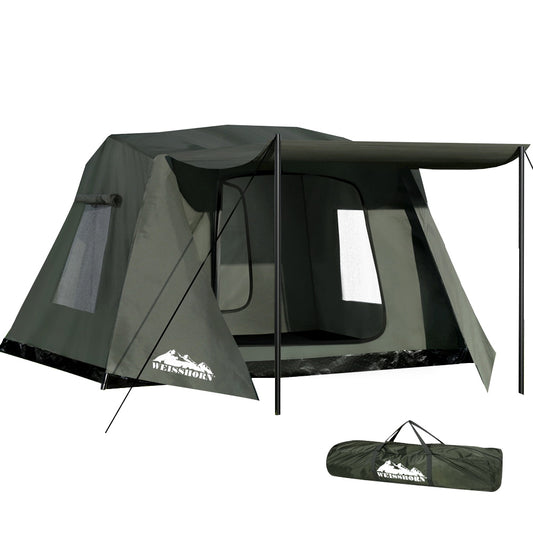
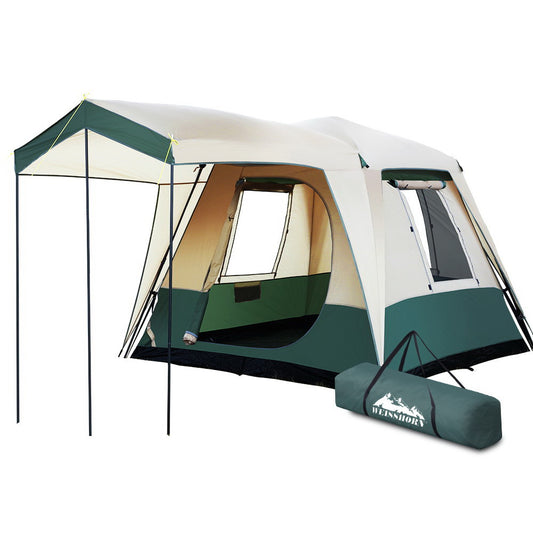
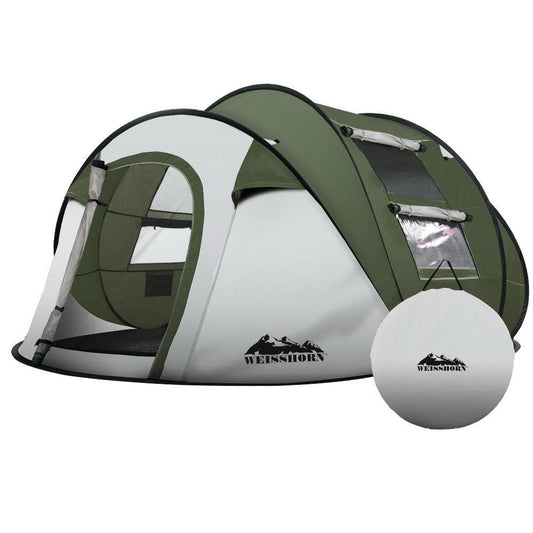
If your idea of a good campsite arrival involves getting the kettle on quickly, instant up tents are worth a close look. They’re built around pre-attached frame systems that speed up setup dramatically, which is handy when you arrive late, the weather turns, or the kids are already asking for snacks.
They’re especially good for families who camp often and want less fuss each time. The compromise can be pack size and weight. Some instant up models are heavier and longer when packed, so make sure they’ll fit your vehicle before you commit.
Multi-room tents for bigger families
For larger families, or for anyone who values a bit of separation, multi-room tents make camping feel more manageable. Separate sleeping areas can help with bedtimes, early risers and storing gear out of the main walkway.
These tents can be brilliant on longer trips, but they do need a decent campsite footprint. If you often camp in tighter sites or more basic bush camps, a huge multi-room setup may be more tent than you really need.
How to choose the right size
One of the biggest mistakes families make is buying too small. If the tent says six-person, that doesn’t always mean six people and six bags with room to move. It usually means six sleeping spots in a fairly efficient layout.
A good rule is to size up at least one step if you want comfort. A family of four will often be happier in a six-person tent. A family of five may want an eight-person model, especially if you’re packing for mixed conditions, bringing stretchers or camping for more than a couple of nights.
Think about sleeping setup too. Air mattresses, stretchers and double mats all take up more room than the neat rectangular dimensions on a product card suggest. If your kids are still young, extra room also gives you flexibility as they grow.
Weather matters more in Australia
Aussie conditions can change fast. Warm afternoons can turn into cool nights, coastal camps can get windy, and a bit of rain quickly exposes weak seams, poor drainage and inadequate fly coverage. When comparing the best family camping tents, weather protection deserves as much attention as interior space.
Look for a full or generous fly, not just a minimal top cover. Good fly coverage helps with rain protection and can also cut down on early morning sun blasting through the tent. Strong poles, quality pegs and decent guy ropes matter too, particularly if you camp on the coast or in exposed inland areas.
Ventilation is just as important. A tent that seals well but traps heat is hard work in warmer weather. Large windows, mesh panels and well-placed vents help manage condensation and keep airflow moving. That’s especially important in family tents where several people are sleeping in one enclosed space.
Features worth paying for
Some tent features sound nice on paper but don’t make much difference at the campsite. Others genuinely improve comfort and save time.
A front awning or vestibule is one of the most useful additions for family camping. It gives you covered space for shoes, bags and camp gear, and it helps keep the main sleeping area cleaner. Internal storage pockets are another small feature that earns its keep quickly when everyone needs somewhere for torches, glasses or a mobile.
Good doors matter more than people expect. Wider doors make it easier to get kids in and out, move gear around and avoid the nightly shuffle over sleeping bags. If a tent has multiple entrances, even better. That little bit of convenience goes a long way on family trips.
A heavy-duty floor is worth it too. Australian campsites aren’t always soft grassy ovals. You might be pitching on hard-packed ground, rougher coastal sites or areas with sticks and stones underfoot. A stronger floor helps your tent last longer and gives you one less thing to worry about.
Value versus cheap
There’s a difference between good value and buying the cheapest option available. A bargain tent can still be the right call if your trips are occasional and conditions are mild. But if setup is frustrating, the zips feel flimsy or the waterproofing is average, the savings can disappear pretty quickly when the weather turns.
For most families, value means buying a tent that covers the essentials properly without paying for specialist expedition features you’ll never use. Reliable weather protection, enough room, sensible ventilation and manageable setup are the big ones. Fancy extras only matter after that.
This is where a practical camping retailer with gear suited to Australian conditions can make life easier. Just Camp Australia focuses on everyday outdoor buyers, which is exactly the sort of approach that suits families who want dependable gear, fair pricing and fast Aussie dispatch rather than overbuilt gear for extreme use.
Best family camping tents for different camping styles
If you mostly stay at caravan parks or established campgrounds, comfort features can matter more than compact packed size. A larger cabin or instant up tent with standing room, bigger windows and a roomy awning may be the better buy.
If you’re driving into bush camps or moving between sites, packed size and setup speed become more important. In that case, a simpler dome or a more compact instant up tent might suit you better than a full multi-room model.
If you camp in summer school holidays, prioritise airflow and shade. If you head away in cooler months too, look more closely at fly coverage, draft protection and the ability to keep gear dry. The best family camping tents are the ones that match your actual trips, not a fantasy version of camping you rarely do.
A smarter way to buy your next tent
Before you buy, picture a real trip from start to finish. How much room is in the car? Who’s setting the tent up? Are you doing one-night stops or week-long holidays? Do you need space to stand, change, stash gear and wait out a shower? Those answers usually point you towards the right tent faster than any spec sheet.
A family tent should make getting away easier, not add more work. If it fits your crew, handles Australian conditions and gives you decent comfort for the price, you’re on the right track. Pick the tent that suits your family now, and your next trip is far more likely to start with a campfire and a cold drink instead of a blow-up in the campground.