Tyre Pressures for Beach Driving in Australia
Soft sand has a way of making even a capable 4WD look ordinary. Get your tyre pressures for beach driving wrong and you can go from cruising the shoreline to digging in with a shovel in a matter of seconds. Get them right, and the vehicle feels lighter, calmer and far less likely to bog.
Beach driving is one of those Aussie trips that looks easy until the sand changes under you. One section is firm and packed down, the next is churned up, dry and deep. That’s why tyre pressure matters so much - it changes the size of your tyre’s footprint, which is what helps the vehicle float over sand instead of cutting into it.
Why tyre pressures matter on sand
When you air down, the tyre spreads out and puts more rubber on the sand. That larger footprint helps reduce sink-in, improves traction and makes the vehicle work less hard. In practical terms, it often means fewer wheelspin moments, less strain on the drivetrain and a better chance of keeping your momentum where it counts.
Higher pressures do the opposite. They can be fine on bitumen, but on soft sand they tend to make the tyre dig. That’s often when people hit the throttle harder, which only buries the vehicle further. The pressure itself is not a magic fix, but it is one of the simplest and most effective adjustments you can make before leaving the access track.
There is a trade-off, though. The lower you go, the more care you need to take. Steering gets softer, heat can build more quickly and there is a greater risk of rolling a tyre off the bead if you corner hard or hit bumps too fast. Beach driving is not just about airing down - it is about matching your pressure to the conditions and then driving to suit.
A good starting point for tyre pressures for beach driving
For many 4WDs, a sensible starting range for tyre pressures for beach driving is around 16 to 20 psi. That is not a one-size-fits-all number, but it is a practical range that works well for plenty of beach conditions in Australia.
Just Camp safety note: Tyre pressures are always a guide, not a guarantee. Vehicle weight, tyre construction, load, towing setup and beach conditions all change what is safe and practical. If you are unsure, start conservatively, keep speeds low, avoid sharp steering, and air back up before returning to sealed roads.
If the sand is reasonably firm, the vehicle is lightly loaded and you are not towing, 18 to 20 psi is often enough. If the sand is soft and dry, or the beach access is chopped up with deep ruts, dropping closer to 16 psi can make a big difference. Some drivers go lower again when conditions are especially tough, but that should be done carefully and usually only when you know what you’re doing.
Vehicle weight matters. A heavily loaded touring wagon, ute with a tray full of gear, or a 4WD towing a trailer may need a different setup to a lightly packed weekend rig. Tyre construction matters too. Light truck tyres, passenger construction tyres, larger all-terrains and mud terrains can all behave a bit differently at the same pressure.
That is why the best approach is to think in ranges, not fixed rules. Start with a sensible reduction, assess how the vehicle feels, and adjust if needed.
When to go lower
Some beaches are forgiving. Others are soft from the entry point and only get worse around headlands, inland exits and dry upper sections. If the vehicle is struggling to maintain momentum, if steering feels like the front is ploughing, or if you can feel the tyres digging instead of gliding, it is usually a sign that more pressure needs to come out.
The key is to act early. Don’t wait until you are chassis-deep and reaching for recovery boards. If you stop and lower pressures before the vehicle is badly bogged, you give yourself a much better chance of driving through cleanly.
Going lower can also help when towing on sand, but that is where caution really matters. A trailer adds drag and can quickly turn a manageable section into a recovery job. In those situations, lowering pressures on both the tow vehicle and the trailer can help, but speeds need to stay low and inputs need to stay smooth.
What happens if you go too low
Lower is not always better. Drop pressures too far and tyres can bag out excessively, especially on turns or uneven tracks. That increases the chance of debeading a tyre, which is the last thing you want on a beach miles from a workshop.
Very low pressures can also make the vehicle feel vague and sloppy. That might be acceptable for crawling through a short, nasty access section, but not for longer runs where control still matters. If you are carrying plenty of gear, have a roof load or are towing, the margin for error gets smaller.
As a general rule, once you get into very low pressure territory, driving style becomes even more important. Keep speeds down, avoid sudden direction changes and stay gentle on the throttle and brakes.
Driving style matters as much as pressure
Good tyre pressures help, but they will not rescue poor technique. Beach driving rewards smoothness. Gentle throttle, steady momentum and reading the sand ahead are what keep you moving.
Sharp acceleration usually just digs holes. Hard braking can bury the front. Sudden steering inputs can scrub speed and push the tyres sideways through soft patches. The better move is to keep everything calm and deliberate.
Pick the firmest line you can. Often that is the darker, more compact sand lower down the beach, but not so close to the water that you risk saltwater exposure or incoming tide problems. On access tracks, watch for churned-up exits where other vehicles have already dug trenches. Those spots often need lower pressures than the beach itself.
Timing helps too. Driving on a falling tide or around low tide usually gives you more firm sand to work with. Midday heat can soften the upper beach, and heavily used holiday stretches can become badly chopped up. Conditions change fast, which is why checking your setup once and forgetting about it is not always enough.
Common beach driving mistakes to avoid
One of the most common mistakes is waiting too long to air down. If the vehicle is already digging in, spinning wheels or losing momentum on the beach access, dropping pressures earlier would usually have made the section easier. It is better to stop in a safe, firm spot and adjust before the sand gets ugly than to wait until the vehicle is already bogged.
Another mistake is treating one pressure as the answer for every beach. A number that works on firm morning sand may not work on a dry, chopped-up exit in the afternoon. Loads change things too. A ute packed for a week away, a canopy full of gear or a trailer behind you can all change how the tyres behave at the same pressure.
Wheelspin is another big one. If the vehicle starts to struggle, more throttle is rarely the fix. It usually digs the tyres deeper, builds ruts and makes recovery harder for you and the next person through. Smooth throttle, steady momentum and an early pressure adjustment are usually a better combination than trying to power through soft sand.
It is also easy to forget the road drive after the beach. Low pressures are useful on sand, but they are not suitable for highway speeds. Before heading back onto sealed roads, take the time to air up properly and check the tyres while you are there. A few extra minutes at the end of the track is much easier than dealing with heat build-up, poor handling or tyre damage on the way home.
Essential gear to manage tyre pressures on the beach
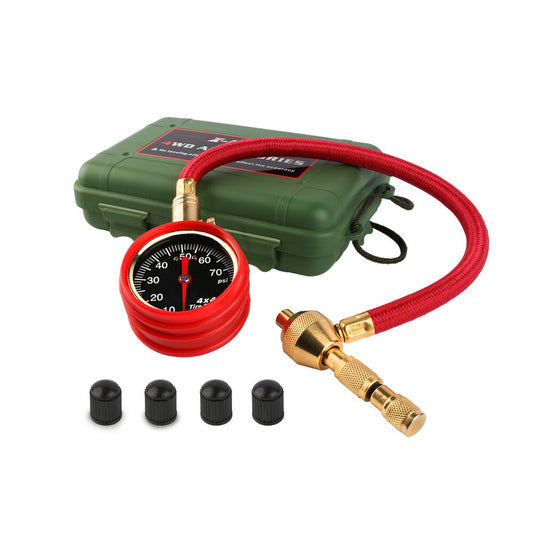
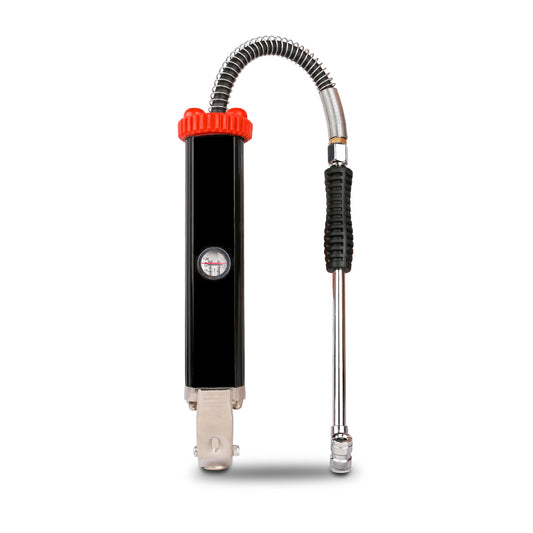
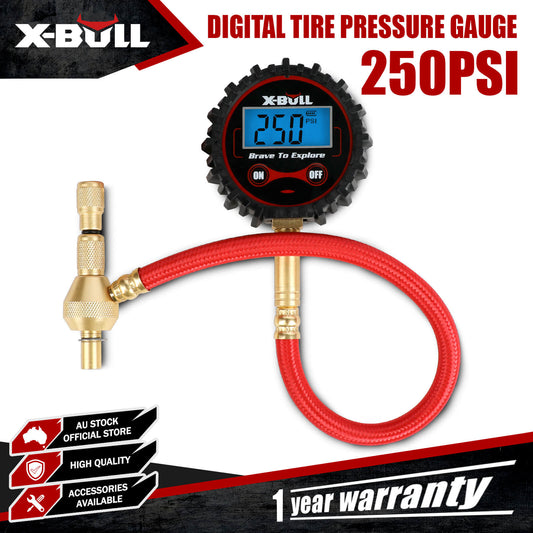
If you are going onto sand, you should have a reliable way to air down and air back up. That means a tyre deflator you trust, a pressure gauge that is easy to read, and a portable air compressor that can handle the job without taking forever. If you want a deeper look at the tools, see our 4WD tyre deflator guide and 4WD air compressor guide.
Recovery gear matters too, because even with good tyre pressures for beach driving, people still get stuck. Recovery boards, a long-handled shovel and suitable 4WD recovery gear are practical basics, not overkill. A soft shackle and recovery hitch can also make life easier if you are travelling with another vehicle.
This is where buying decent gear once pays off. You do not need the most expensive setup on the market, but you do need equipment that works when the access track is soft, the family is waiting, and the tide is not interested in giving you extra time.
Before you air back up
Once you leave the sand, air back up before returning to higher-speed roads. Low pressures that work well on the beach are not suitable for normal highway driving. The tyre flexes more, heat builds faster and handling will not be what it should be.
Take a minute to inspect the tyres while you are at it. Sand driving can hide issues, and it is worth checking for cuts, sticks, shell damage or anything wrapped around the wheel. It is also a good time to clear sand from recovery gear and pack things properly instead of throwing it all back in the boot.
If you have been driving through salt spray or close to the waterline, a proper rinse underneath the vehicle afterwards is a smart move. Sand and salt are hard on vehicles, and a bit of care after the trip helps keep your gear in better nick.
The pressure you need is the one that works for the conditions
The best tyre pressure for one beach can be wrong for the next one. A lightly loaded wagon on firm morning sand might be happy at 20 psi. The same vehicle on a soft, dry afternoon exit may need 16 psi or lower to get through cleanly. Add passengers, camping gear, a canopy or a trailer and the equation changes again.
That is why experience matters, but so does staying flexible. Start sensible, watch how the vehicle responds and adjust before you get into trouble. Beach driving is meant to be enjoyable, not a test of how hard you can flog the throttle.
A little time spent getting pressures right usually saves a lot of time with a shovel later. And if you are heading coastal, having the right gear packed and ready makes the whole trip easier - from the first access track to the final air-up before home.