Portable BBQ Camping Done Right
Share
Nothing kills the mood at camp faster than a flimsy cooker, uneven heat and sausages that are burnt outside but still cold in the middle. Portable BBQ camping sounds simple until you are dealing with wind, limited space, patchy ground and hungry people waiting for dinner. Get the setup right, though, and camp cooking becomes one of the best parts of the trip.
For plenty of Aussie campers, a portable BBQ is the sweet spot between a full camp kitchen and cooking over a fire. It is quick to set up, easy to control and a lot more practical when fire bans, weather or campsite rules take open flames off the table. Whether you are heading off in the 4WD, towing the caravan or packing for a family weekend away, the right unit makes a big difference.
Why portable BBQ camping works so well
A good portable BBQ gives you fast heat, predictable cooking and less mess at pack-up. That matters when you are pulling into camp late, feeding kids before dark or stopping for lunch on the side of the track. You want something that gets hot without a fuss and packs away without covering the rest of your gear in grease.
It also suits the way most Australians camp. Not every trip is a big off-grid mission. Sometimes it is a coastal caravan park, a national park campground or a quick overnighter by the river. In those situations, a compact BBQ is often more useful than a bulky cooker with extra parts you never use.
There is a trade-off, of course. Smaller BBQs save space, but they usually have less cooking area. That is fine for a couple or a small family, but if you are regularly feeding a bigger group, size starts to matter. The best choice depends on how you camp, how many people you cook for and how much room you actually have in the car, camper or van.
What to look for in a portable BBQ camping setup
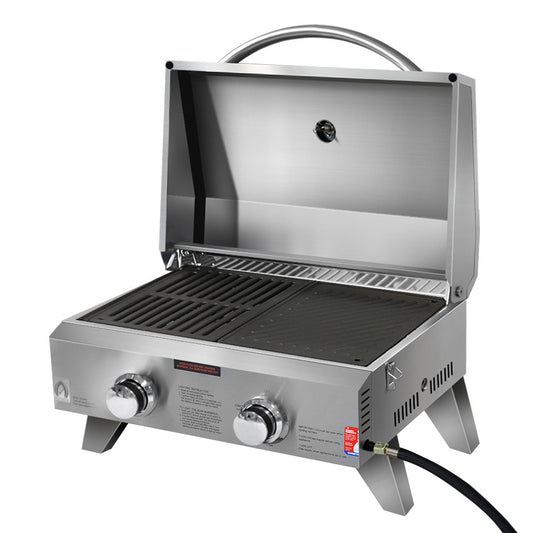
The first thing is size. Not just the grill plate size, but the packed size too. A BBQ might look compact in a photo, but if it is awkward in the boot or takes up half the front box on the camper trailer, that gets old quickly. Look at the dimensions packed and set up, and think about where it will ride on the trip.
Weight matters as well, especially if you are loading and unloading often. If you are mostly car camping, a heavier unit can still work well. If you are moving between camps, lifting gear in and out of the ute or carrying equipment to a beachside site, lighter is easier.
Fuel type is another big one. For most campers, petrol is the practical option because it is fast, clean and easy to manage. You get steady heat and simple ignition, which is handy in wind or cool weather. Some BBQs run on small canisters, while others connect to larger petrol bottles. Small canisters are convenient for short trips, but larger bottles usually make more sense for longer stays or regular use.
Build quality is where value really shows. A portable BBQ does not need to be fancy, but it does need to handle travel, heat and repeated use. Look for solid legs or a stable base, a cooking surface that is easy to clean and materials that can cope with Australian conditions. Rust, weak hinges and poor flame control are the kind of problems that only show up after a few trips, and by then they are a headache.
Heat control and cooking surface
Even heat is more important than maximum heat. Plenty of foods people actually cook at camp, like snags, burgers, bacon, onions and fish, need control more than brute force. Hot spots make cooking annoying and waste food.
A flat plate can be more versatile than a full grill for camping. It handles breakfast, sandwiches and delicate foods better, and it is often easier to clean. A grill section is handy if you want those char marks or need extra fat to drain away. For many campers, a combination plate gives the best flexibility.
Cleaning and pack-up
If a BBQ is hard to clean, you will use it less. That is the honest truth. Grease trays that remove easily, non-stick or enamelled surfaces and simple construction all save time.
Think about the end of the trip, not just the first cook. Packing a greasy unit into the car is never ideal, so a compact BBQ with a decent drip tray and manageable surfaces is worth it. A carry bag or storage tub also helps keep the rest of your gear clean.
Matching the BBQ to your camping style
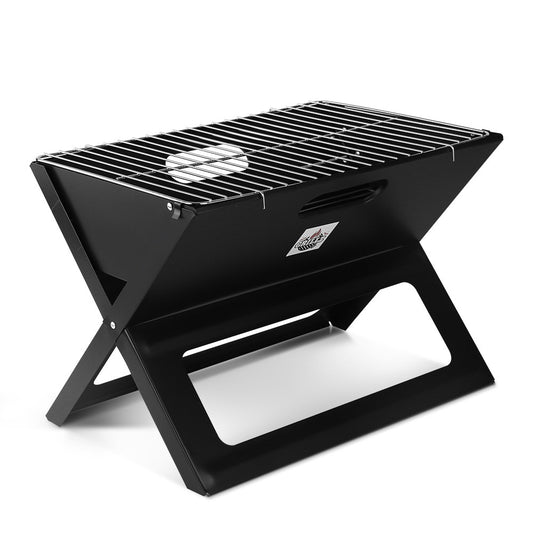
If you mostly do quick weekend trips, small and simple usually wins. You are probably cooking one or two main meals, maybe a breakfast, and you do not want to overpack. A compact tabletop model is often enough.
For family camping, cooking space becomes more important. You may be managing multiple batches, different foods and impatient eaters. In that case, going slightly larger saves time and hassle, even if it takes up a bit more room.
If you travel in a caravan or camper trailer, you have more flexibility. You can carry a more capable portable BBQ without sacrificing too much space. That makes it easier to cook properly across several days rather than treating the BBQ as a backup option.
For 4WD touring, it depends on your storage setup. If every compartment is already working hard, compact gear is gold. But if you have drawer systems, a canopy or dedicated cooking storage, you can step up to a sturdier unit with a bit more performance.
Portable BBQ camping gear worth packing with it
The BBQ is only part of the story. A few smart extras make camp cooking quicker and less frustrating.
A stable table is a big help, especially on uneven ground. So is a windbreak if you are cooking in exposed spots. Tongs, a decent spatula, a lighter or spare ignition source and a small washing tub all earn their place fast. If you are using petrol, always pack more fuel than you think you need. Running out halfway through dinner is a rookie mistake and an annoying one.
It also pays to think about food storage. There is no point having a great cooker if your meat is warm and your salad is average by the time you arrive. A reliable cooler or fridge setup keeps the whole meal plan on track.
Cooking better on a portable BBQ at camp
Camp cooking does not need to be complicated. In fact, the simpler the meal, the better the portable BBQ usually performs. Burgers, skewers, steaks, chops, fish fillets and veg all work well when the plate is properly preheated.
One mistake people make is overcrowding the cooking surface. That drops the heat and leaves everything stewing instead of searing. Cook in batches if you need to. It is usually faster than trying to cram everything on at once.
Wind is another factor campers often underestimate. A portable BBQ can lose heat fast on an exposed site, which affects cooking time and fuel use. Set up somewhere sheltered and stable, with good ventilation and enough clearance around the unit.
Cleaning as you go also makes a difference. Scraping down the plate while it is still warm is much easier than dealing with it the next morning. It keeps flavours cleaner too, especially if breakfast is following dinner on the same surface.
Safety and campsite common sense
Portable BBQ camping only works if you are using the gear responsibly. Always check local rules before cooking, especially in warmer months when fire restrictions are common. Petrol BBQs are often allowed where open fires are not, but rules vary by area, so it is worth checking before you leave.
Set the unit on a firm, level surface and keep it clear of tents, awnings and anything flammable. Never use it inside an enclosed tent, annex or vehicle. That should be obvious, but every year people take risks because it is windy or raining.
After cooking, make sure the unit has cooled properly before packing it away. Double-check fittings, turn off the petrol and store everything securely for travel. A few extra minutes at pack-up beats damage to your gear or worse.
Is a portable BBQ worth it?
For most campers, yes. A portable BBQ is one of those pieces of gear that gets used more than expected because it makes life easier. It gives you fast meals, more control than a fire and less fuss than a full camp kitchen setup.
The trick is buying for the way you actually travel, not the way you imagine you might one day. If your trips are short and simple, keep it compact. If you cook often and feed a crew, give yourself more space and better heat control. Great value gear matters, but the best buy is still the one that fits your setup and gets used every trip.
If you are building out your camp kitchen, Just Camp is the sort of place where practical gear makes sense - no-fuss options, solid value and gear ready for real Australian trips. Pick the right portable BBQ, pack a few smart extras and dinner at camp gets a whole lot easier.
A good feed after a day outdoors does more than fill people up. It slows the trip down in the best way, gets everyone gathered around and turns a basic campsite into a proper base for the night.